

And the new oldest rum is….

The record previously held by Nguyen Dinh Tuan Viet (whom we mentioned here) ultimately lasted only two years. After the Harewood 1780 and the Ancienne 1772 rum, a new bottle has pushed the boundaries: a Jamaican rum dated 1750. An exceptional piece, now kept by Luca Gargano.
22, a record to beat
That's the number of years separating the old record from the new one—a significant leap backward. There is no longer any rum as old as this one… And the sheer scale of it is staggering: 276 years separate us from this true relic! It was following the article published on our website that Luca Gargano came forward. Within his impressive collection, he believes he possesses a rum even older than Rhum Ancienne 1772...
After some research in his veritable "library" of spirits, he even manages to identify two: a "Rum 1766," adorned with a pewter label bearing a handwritten inscription, and above all, our famous—and new record-holder—Jamaican rum from Kingston, vintage 1750.
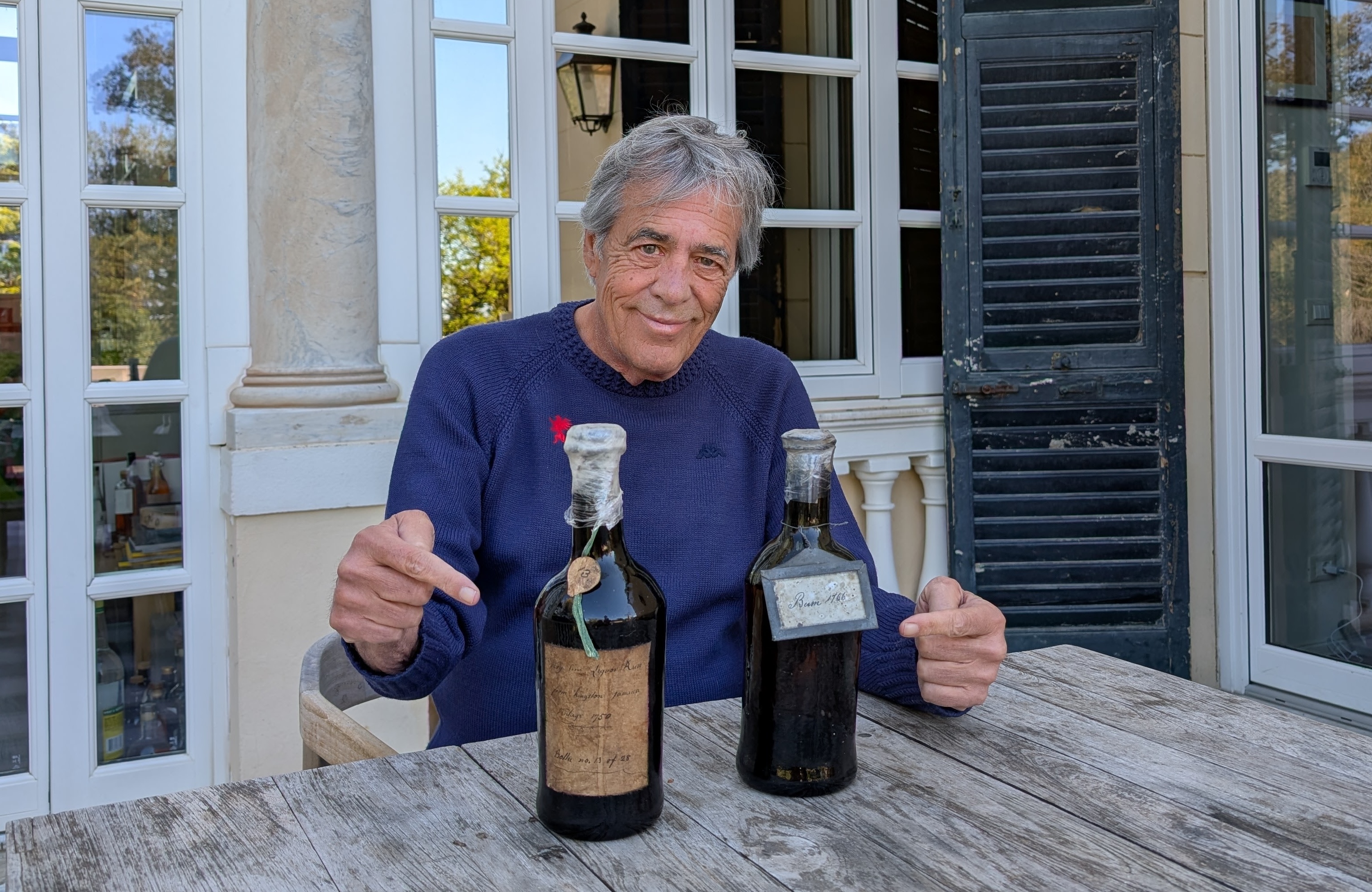
“To be honest, I didn’t know I owned the oldest bottle of rum in the world! I discovered it thanks to your article… I bought it several years ago, not for this record, but because it seemed exceptional and fascinating to me, like so many other bottles of rum.”
The World in 1750
In 1750, the world was still largely rural and slow-moving, dominated by kings and empires, riddled with profound inequalities, but also experiencing a period of intense intellectual ferment. It was a pivotal era, just before the great industrial and political revolutions that would forever transform the planet.
This was the century of philosophers such as Voltaire, Rousseau, and Montesquieu, who criticized absolutism and defended reason, liberty, and rights—and they certainly had their work cut out for them, at a time when the triangular trade and slavery were experiencing considerable growth. Furthermore, the world remained largely unknown in its contours, its borders sometimes still imprecise. In 1750, while life was slower than today, life expectancy was also much shorter: generally between 30 and 40 years, rarely more.
1750 in Jamaica
A British colony at the heart of an extremely violent system, the island of Jamaica was dominated by plantations. Sugar, nicknamed "white gold", was highly prized in Europe, and the entire economy based on it relied on the triangular trade (approximately 90% of the population was enslaved, mostly deported Africans). Jamaica was then among the most profitable colonies of the British Empire—and one of the richest in the world—while also being one of the most brutal of its time.
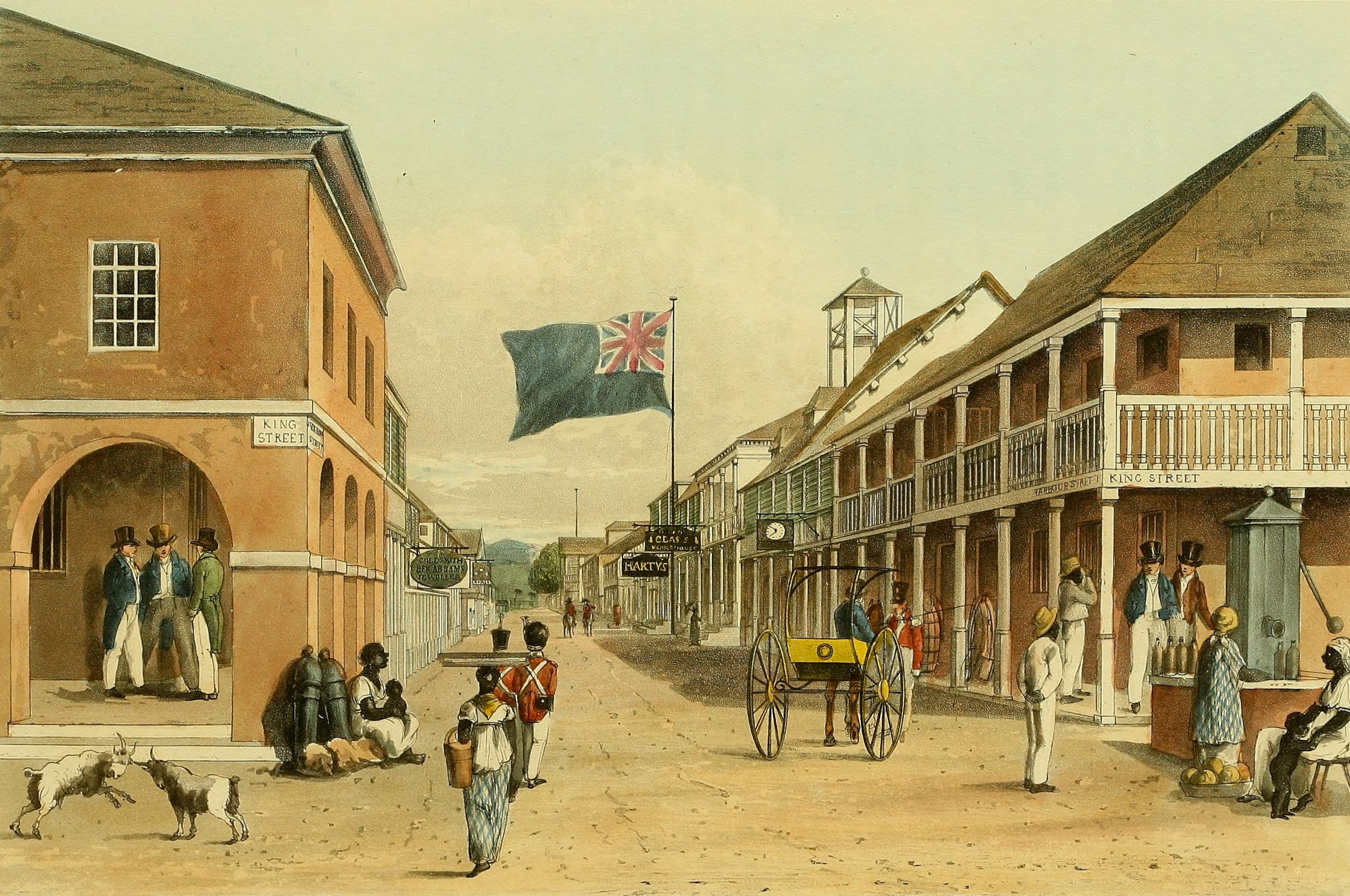
No "photos" from 1750 exist yet, as photography wasn't invented until the 19th century (around 1820–1830). The image above dates from the early 19th century, but the city's appearance is still very close to that of the 18th century: wide grid-pattern streets, low colonial houses, and bustling port and slave-trading activity.
It was in this particularly harsh context that the rum we're interested in here was produced, and its origin is far from insignificant: Kingston, founded in 1692, was then a very active port—one of the most important in the Caribbean—and Jamaica's main commercial center.
The true economic heart of the island, the city attracted merchants, traders, and sailors. Significant wealth (notably sugar and rum) passed through and became concentrated in the hands of white settlers. Warehouses, markets, and taverns were particularly lively.
Rum production in Jamaica was already well-developed by 1750, although it remained largely artisanal. While sugar remained the primary product, rum increased the profitability of the plantations, which numbered in the hundreds. Each plantation generally had its own facilities: a sugar mill and a still, often rudimentary.
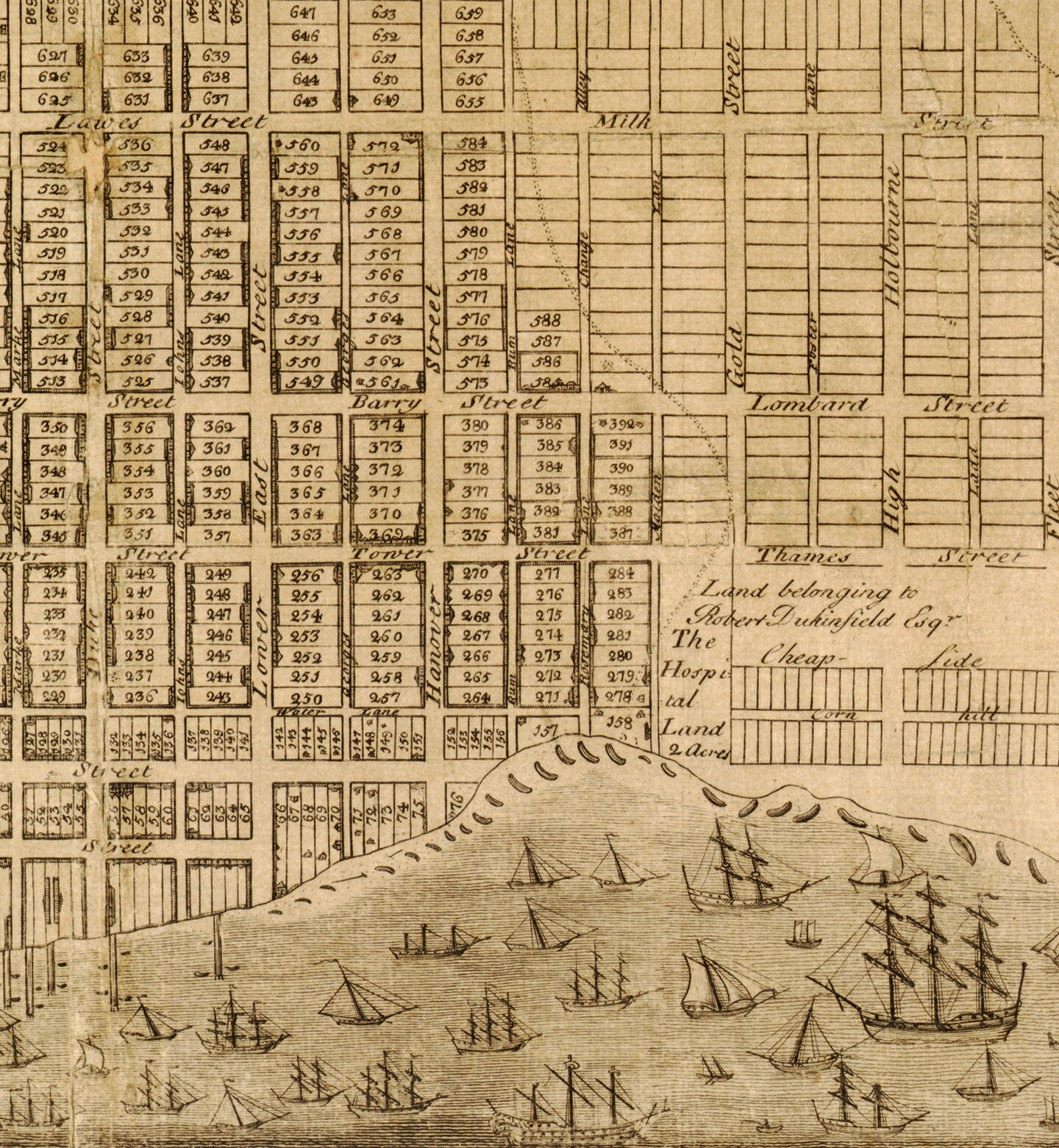
Above is a map engraving from 1750 depicting the city of Kingston, showing the city's grid plan, the port and ships, as well as the first colonial buildings.
Once barreled, the rum was exported to Europe and North America, but it also played a significant role in the triangular trade, where it could be exchanged for slaves in Africa. It was also regularly consumed by sailors, soldiers, and colonists.
And while precise data on rum production in 1750 is lacking, sugar production is estimated at around 50,000 tons—a fifty-fold increase in just 80 years, indicating a dramatic expansion of the plantations. This would correspond to approximately 10,000 to 15,000 tons of molasses. Given that 18th-century distilleries produced an average of 200 to 250 liters of rum per ton of molasses, we can estimate an annual production of between 2 and 4 million liters, equivalent to 3 to 6 million 70cl bottles.
In this context, many merchants sought to import Jamaican rum, whose reputation was steadily growing, to the point of being considered one of the best in the world. It is undoubtedly this prestige that explains the emergence of this type of bottling: well before the rise of ultra-limited editions that are so prevalent today, the 18th century already saw the emergence of productions that, in retrospect, could be described as "collector's items" and particularly exclusive.
Kingston 1750 Jamaican Rum
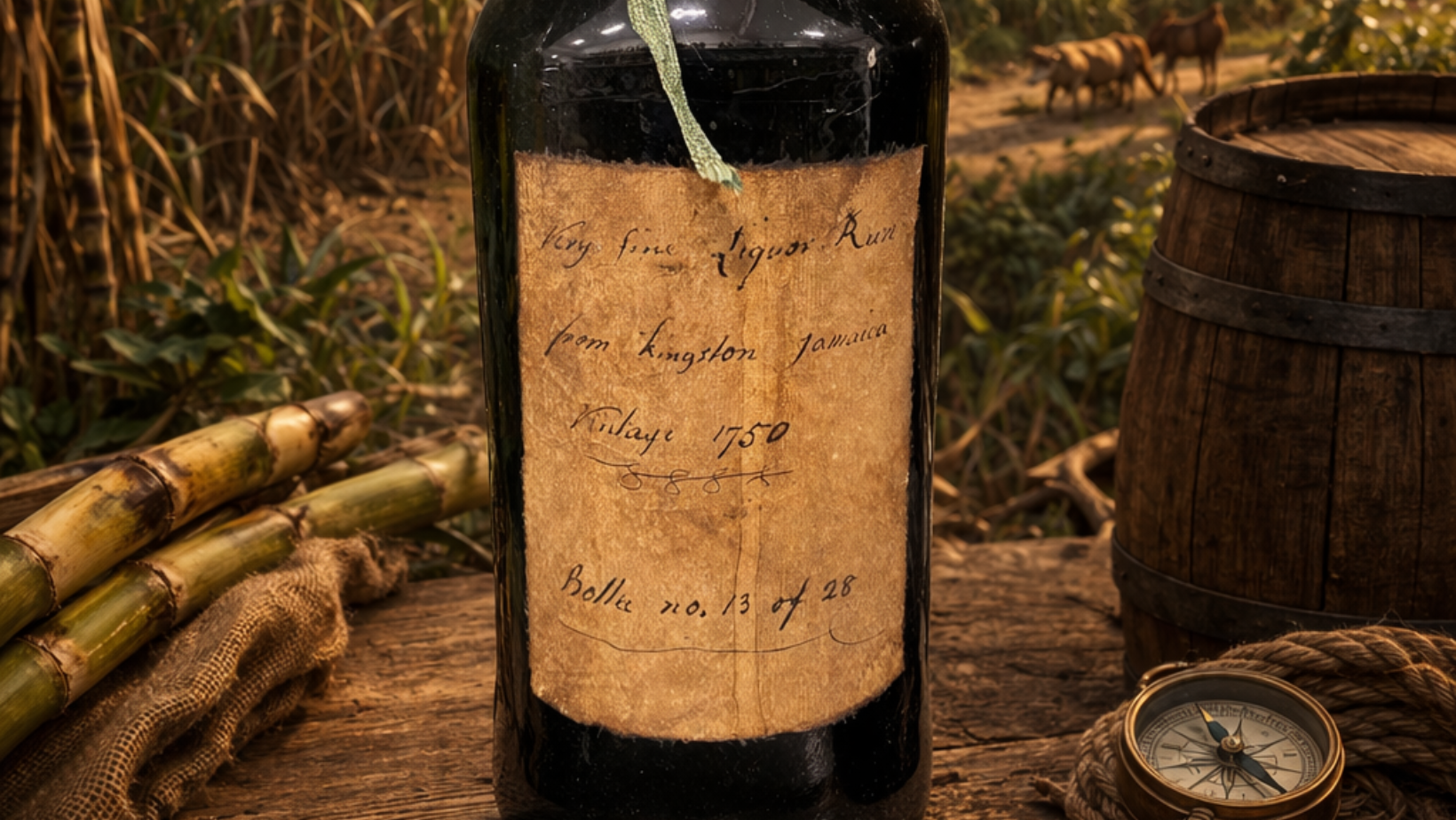
The inscription "Very Fine Liquor Rum" reflects an era when producers readily used flattering and laudatory terms, well before some more recent rums. Take, for example, Wray & Nephew's "Finest Old Jamaica Liqueur Rum" (also Jamaican), marketed nearly two centuries later, where the word "liqueur" is more for show than substance (it is indeed rum, not liqueur).
At the time, emphasizing the term "liqueur" primarily served to suggest to the prospective buyer the exceptional nature of the product, implying that it stood out from the competition—in other words, that it was a very old and truly unique rum.
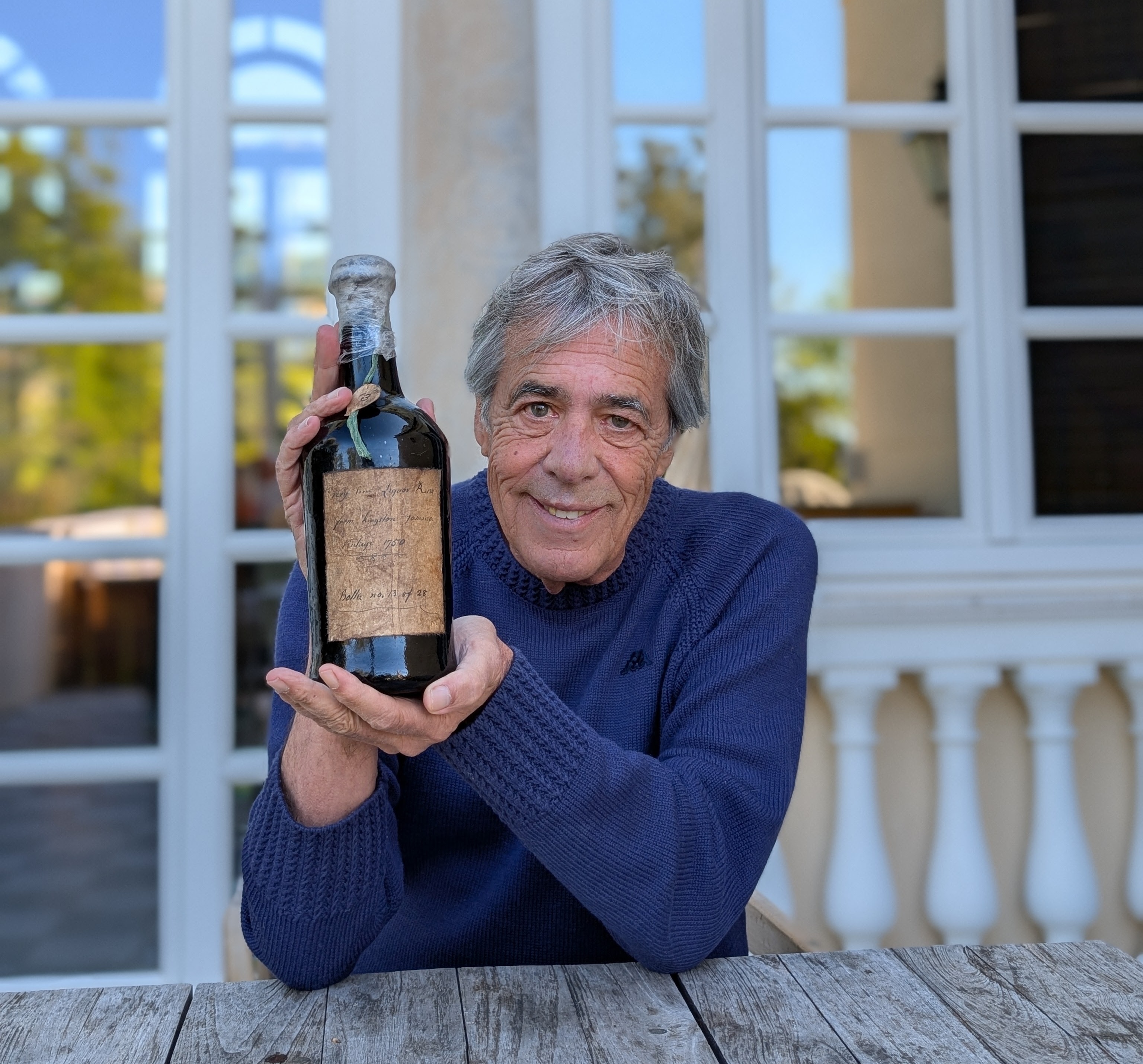
It is therefore reasonable to assume that this bottle of Kingston rum dating from 1750 contains a nectar without equal today. At the time, fermentations were entirely natural and spontaneous, relying on indigenous yeasts, and lasted several days. They were often initiated by the addition of organic matter such as vinasse—the famous dunder.
As for distillation, Jamaican plantations used rudimentary pot stills, heated directly with wood. Distillation was most often carried out in a single pass, sometimes in two to improve quality. This resulted in powerful, rich, and sometimes slightly rough rums. We are still far from the standardized, more neutral spirits that would later appear: these old rums were distinguished by a high concentration of aromatic compounds, particularly esters, fully embodying the "funky" style typical of Jamaican rums.
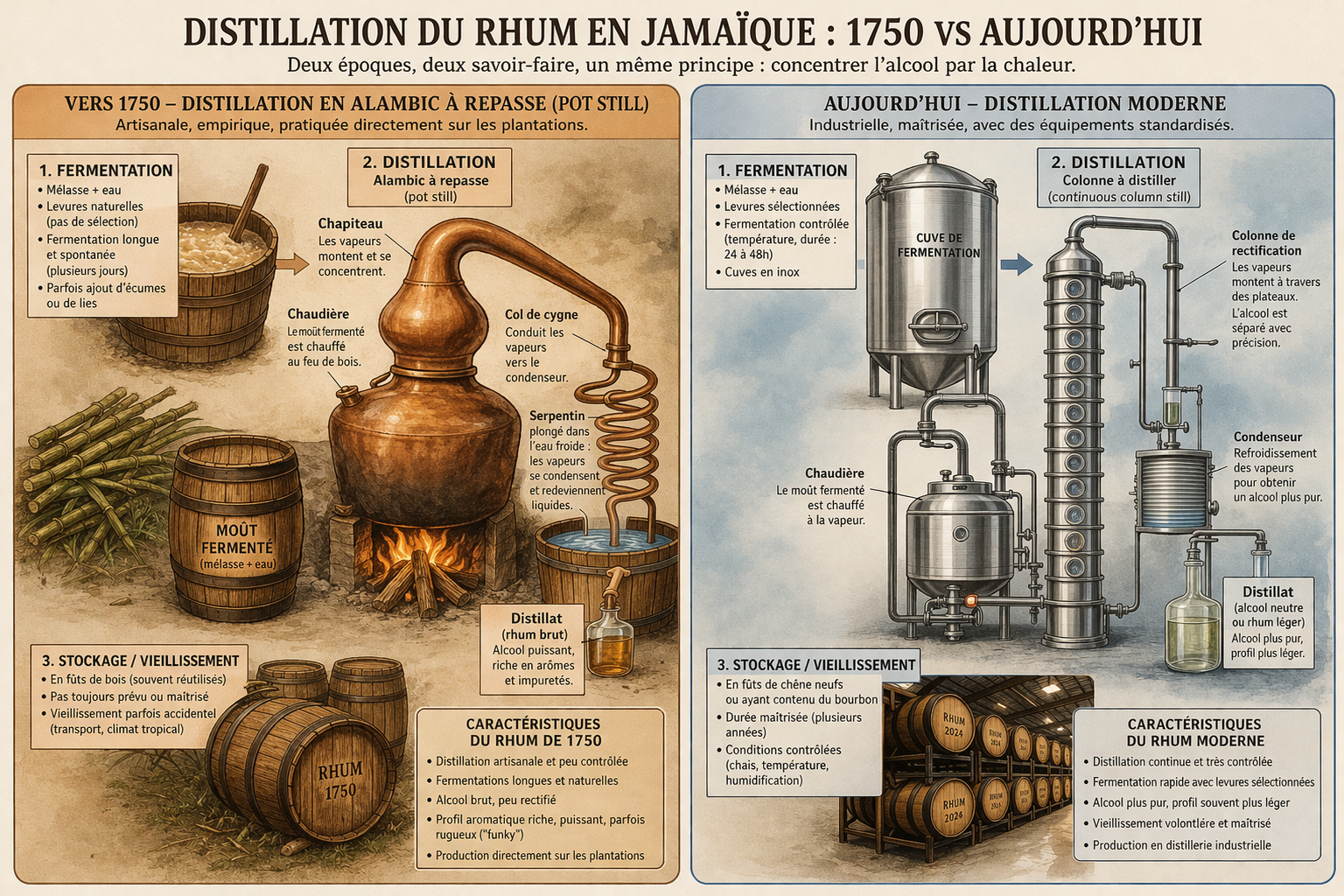
Above, an infographic presenting in a simplified way the principles of distillation of the past, compared to those, more modern, used today.
The handwritten inscriptions on the label confirm the previously mentioned origin (Kingston, Jamaica), the vintage (1750), and a particularly remarkable detail: the mention of a limited edition of only 28 bottles. It's hard not to feel a sense of awe at this point, realizing that we are dealing with a bottle that was commercially available (or so we assume, unless it was reserved for a select circle of family or friends) more than two and a half centuries ago, and produced in such a tiny quantity. The very idea of such a bottle surviving the passage of time seems almost unreal…
This bottle, the thirteenth in the series, has also been numbered by hand, like the rest of the label. To fully grasp its significance, one must consider the context of the time: around 1750, people primarily wrote with quills and ink, not pens (which would appear in the following century). Most often, a goose quill (or sometimes reed), hand-sharpened, was dipped in ink generally made from gallnuts. Writing at the time required great skill and a steady hand (yes, even for doctors of the era).
Finally, the label's material itself is a telling clue: here it is parchment, still commonly used for official documents, even though paper was already beginning to spread in the 18th century.