


Harewood Light Rum 1780 (light)
75cl / 69°
€40,901.64

The end of the year is gently approaching, time to pause and tell the story of one of the oldest rums ever authenticated, the famous Harewood 1780. This spirit, originating from Barbados, could very well have been enjoyed by Louis XVI and Marie Antoinette at Versailles, unless it was bottled in 1789, the year they were ousted by the people before ultimately losing their heads a few years later. A spirit steeped in history and rich in meaning, which we will recount below…
The origins of Harewood rum date back to the 17th century, a time when many European merchants made their fortunes on the backs of enslaved Africans. Taken from their homelands and transported to the Caribbean and the Americas, they were forced to work on plantations to produce goods for the luxury market, such as sugar, cotton, tobacco, and rum.
Considered one of the jewels of English history, the House of Harewood—like most leading British institutions—is no exception to this rule. Its renown is inextricably linked to slavery and colonialism. The practice was rarely questioned at the time (the abolition of slavery in the United Kingdom would not be fully achieved until two centuries later, between 1833 and 1838) and constitutes one of (if not the) foundations of many national organizations that still exist today.
Among the key figures in the story that brings us here is Henry Lascelles, 21 years old at the time of the events. He controlled every aspect of the sugar trade, serving as both a customs agent at the highly lucrative Barbadian port of Bridgetown and the official banker for plantation owners. The young man also owned a fleet of ships used to transport slaves to the Caribbean, as well as several sugar distribution warehouses in London. Simply put, by the mid-18th century, the profits from the sugar trade made him one of the richest and most influential men in England.
Let's return to 1780, the year Harewood rum was first distilled: the Lascelles family owned numerous estates and plantations in Barbados, including the one that would later become the home of the famous Mount Gay rum. Henry's son, Edwin Lascelles, born in Barbados, would own twenty-four plantations, and with them, thousands of enslaved people. Edwin, who inherited his father's fortune, used part of it to build Harewood House starting in 1759 (and which became habitable in 1771): Harewood House, a unique Palladian palace located in Yorkshire, England, is a member of the "Treasure Houses of England," a kind of heritage consortium. By the end of the 1780s, he owned no less than 12,000 hectares of land spread across Barbados, as well as Jamaica, Grenada, and Tobago, becoming one of the largest landowners in the Caribbean.
Rum, however, remained a relatively unprofitable business for him. Historical records (pictured below) – discovered much later in the Harewood family cellars – give us an idea of the quantities of wine and spirits purchased and consumed from the 18th century onward: it's worth noting that rum was ultimately consumed in small quantities. Only one or two bottles were drunk each year, with the exception of 1805, when eight bottles were exceptionally consumed in December.

After the abolition of slavery in 1833 and the emancipation of the British West Indies in 1838, Henry Lascelles, by virtue of his title 2nd Earl of Harewood, received over £26,000 (€30,000) in compensation, the equivalent of the value of the 1,227 enslaved people they still owned. The Lascelles family subsequently sold the majority of their Caribbean plantations in the early 19th century, before another branch of the family finally sold the last remaining Lascelles plantation, Belle Estate in Barbados (pictured below), in 1975. Around this time, rum seems to have been more or less forgotten, as if it had fallen out of fashion. But a few decades later, descendants of the Harewood family made a discovery that would once again make history…

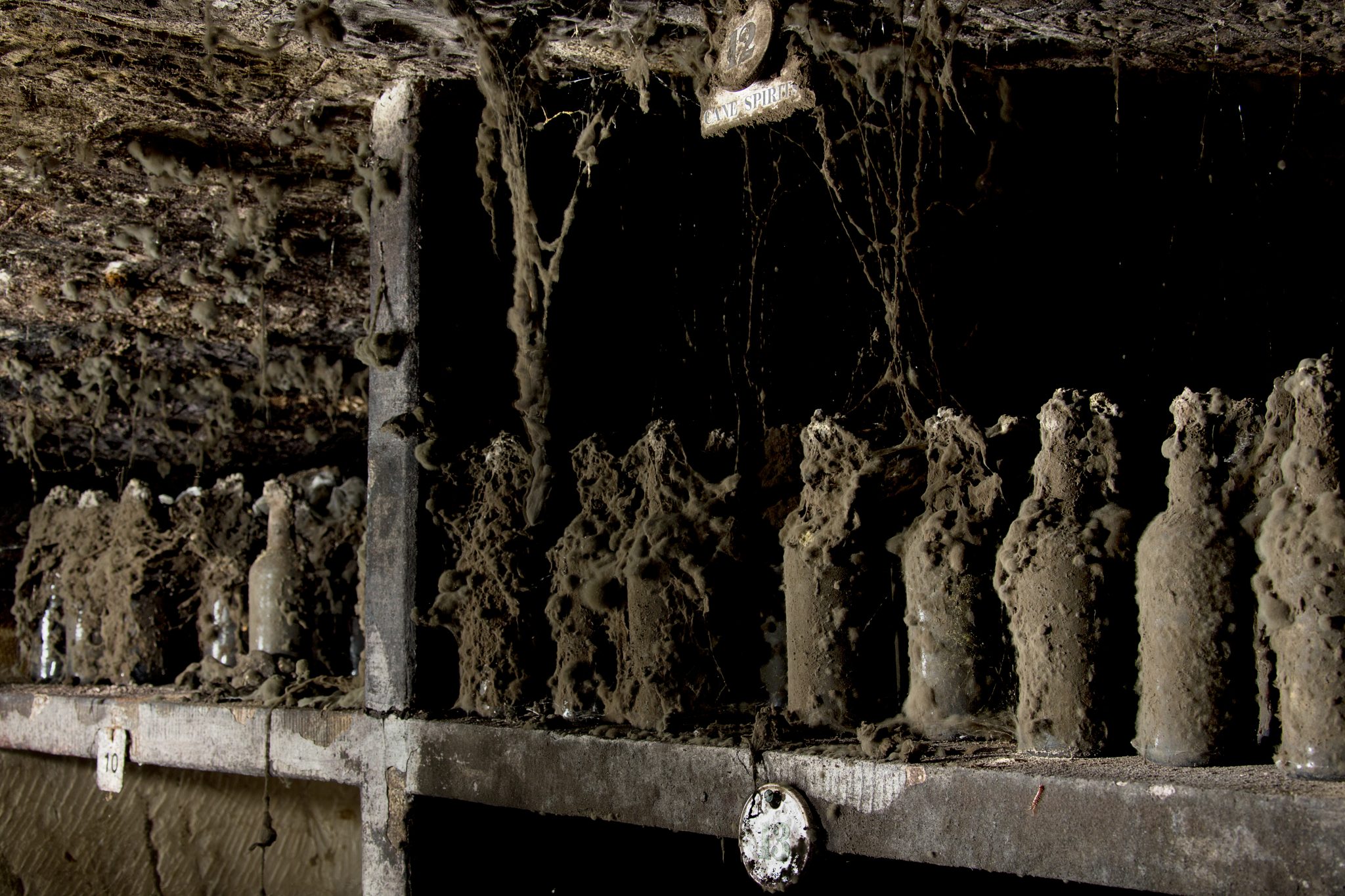
At the beginning of the 21st century, in 2011 to be precise, Henry and Edwin's descendants discovered dozens of dusty, mold-covered bottles in the cellars of Harewood House. A single photograph of these bottles (see above) would soon go viral. Placed on two shelves at the far end of the family cellars, Mark Lascelles discovered twenty-eight bottles, only about twenty of which were deemed in good enough condition to be sold.
The archives, as well as a meticulous examination of the bottles, revealed our famous distillation date. The rum was then shipped to England in casks before being bottled directly at Harewood House. This is evidenced by the authenticated antique (and British) hand-blown glass, as well as the contents of the bottles. After in-depth analysis, the experts decided to separate the rums by creating two distinct categories: a Harewood rum called "light" (meaning clear/light) bottled at 69.38%, and a Harewood "dark", darker and presumably older, offered at 57.76% alcohol.

Thus, between 2013 and 2014, two lots were auctioned by the renowned auction house Christie's: a first lot of 12 bottles in December 2013, followed by a second lot of 16 bottles in December 2014. Estimated at between £600 and £800 per bottle (€600/€900), the first lot sold for £80,000 (over €90,000) and the second for £100,000 (over €113,000). The proceeds from these sales benefited the Geraldine Connor Foundation, a charity that helps maintain cultural and educational ties between the Caribbean and Great Britain through the performing arts.
And while the first examples were sold for around €7,500/€8,000 in 2013 and 2014, subsequent sales reached record highs: £24,500 for a bottle in 2020, the equivalent of more than €27,000, and even $30,000 (over €26,000) in 2023 via the American company Old Liquors.
The discovery of the bottles sparked widespread debate: celebrating the rarity of a rum aged over 240 years without addressing the economic and human circumstances that enabled its production would have been reductive. This is why the Lascelles family wanted to highlight the rum's unique history. They have thus strived to re-examine its complex history in the 21st century and have taken a number of steps to address its past, as well as to encourage other institutions to acknowledge their role in the transatlantic slave trade of Africans.
The descendants have publicly acknowledged their family's involvement in the trade and have endeavored to highlight the lives of slaves who lived and worked on family-owned plantations - working with archivists and historians to bring these stories to the forefront, as well as recognizing and celebrating descendants of Africans living in Britain, such as the award-winning actor and author David Harewood - whose ancestors were enslaved on a plantation in Barbados owned by the 2nd Earl of Harewood.
Once officially recognized as the oldest rum in the world (it held a place in the Guinness Book of Records before being dethroned by a rum from 1772), the release of Harewood 1780 rum received extensive media coverage. Its success even prompted some companies to release special collector's items:

In 2016, Speake-Marin, in collaboration with Wealth Solution (a company specializing in collectibles, which had purchased a bottle at Christie's first auction), released a Rum-Watch, a timepiece combining Swiss precision with "the spirit of the Caribbean seas and maritime adventures." Available in titanium (priced at €10,000) or 18-karat rose gold (twice the price), it was a limited edition (49 titanium watches and 10 gold) featuring, of course, a drop of rum embedded in the dial at precisely 11 o'clock, the time for an aperitif (a clear nod to the time Royal Navy sailors received their rum ration).
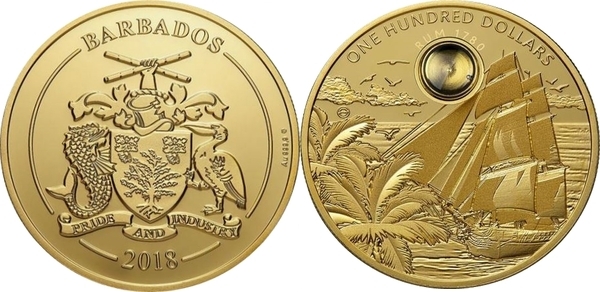
Another item also containing a drop of Harewood 1780 rum is this commemorative $100 coin. The obverse features the coat of arms of Barbados, while the reverse showcases our 1780 rum drop. This meticulously minted coin, crafted from 99.99% pure gold, was produced in a limited edition of 300.
It is part of a larger collection entitled "Oldest Spirits," which includes three coins, each containing a drop of a very old spirit (Glenlivet 1862, Gautier Cognac 1762). Priced at €7,000, it will not be promoted by any actor.
.png)
.png)
.png)
.png)
.png)
.png)