
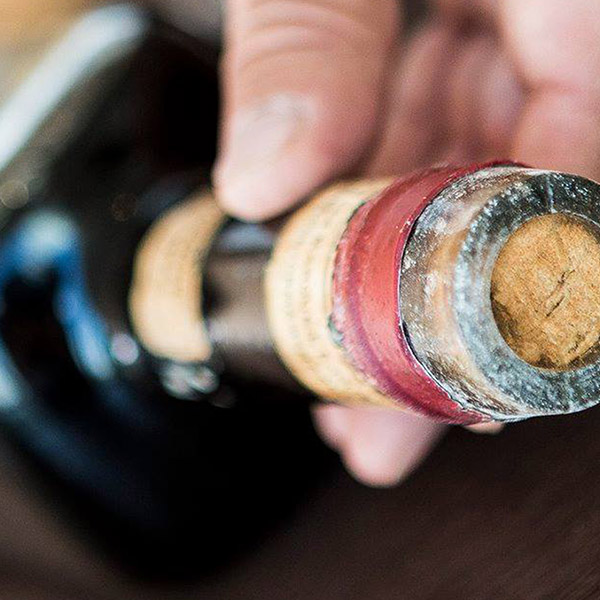

1 Bottle 1 Story : Neisson 2003 Japan

In 2010, Neisson distillery bottled a single cask for the Japanese market, bearing the 2003 vintage. A bottle now sought after by collectors, yet its back label reveals a little surprise…
Through Alex Bobi’s memories and Grégory Vernant’s explanations, we’ll explore the story behind this selection, as well as the other bottlings produced for Japan Import System. An opportunity to discover a few peculiarities of Neisson’s production in the early 2000s.
Japan Import System, from Tokyo to Le Carbet
The story of Japan Import System begins in the 1920s, in Tokyo's Tsukiji district, where Katsuhiko Tanaka's grandmother opened a liquor shop. The family business grew over the following decades, until Katsuhiko took over part of its operations in 1989 and established Japan Import System.
His idea was simple: travel the world in search of authentic wines and spirits, meet the producers, and select bottles that truly reflect their terroir. Particularly passionate about Scotch whisky, he was also behind Kingsbury, a company specializing in the selection and bottling of single malts for the Japanese market.
Rhum agricole also plays an important role in this approach, and Japan Import System has helped introduce it to Japanese enthusiasts, notably through its Rum Festa event, first held in 2008. In 2009, Neisson joined its portfolio alongside other renowned Martinique distilleries.
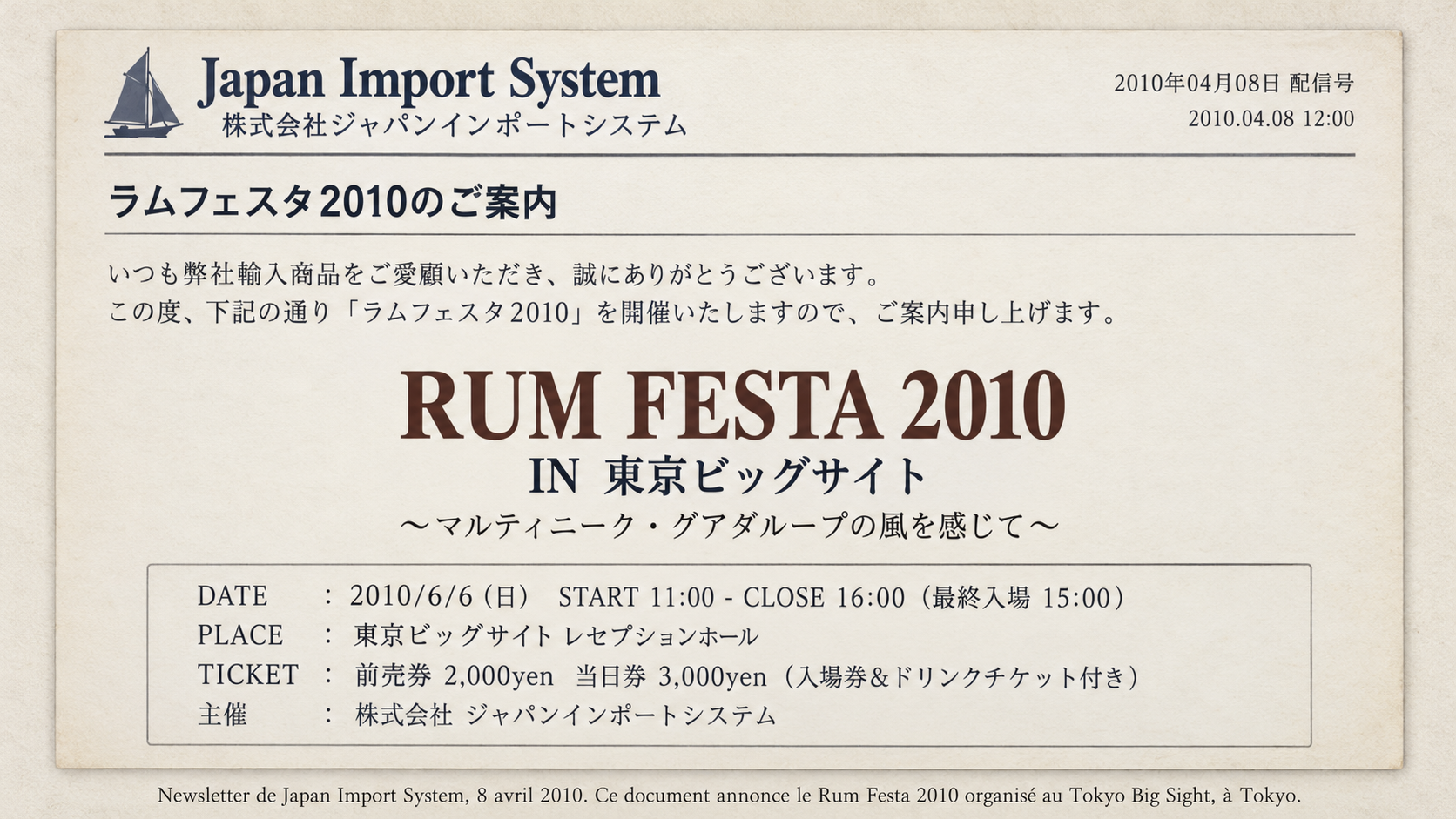
( Excerpt from Japan Import System's newsletter dated April 8, 2010, announcing Rum Festa 2010 at Tokyo Big Sight )
As Alex Bobi recalls, Japanese representatives travelled to the distillery in Le Carbet to personally select casks. This was still an unusual approach for Neisson, but the distillery was happy to give it a try. That encounter would lead to several bottlings produced specifically for the Japanese market, with a few interesting peculiarities that we are about to discover…
2003, 2004: When One Vintage Hides Another
A closer look at the labels of Neisson's first Japanese selections reveals an intriguing detail. The stated vintages do not match the distillation dates. The Neisson 2003 was actually distilled on June 15, 2002, while the 2004 comes from a distillation carried out in May 2003.
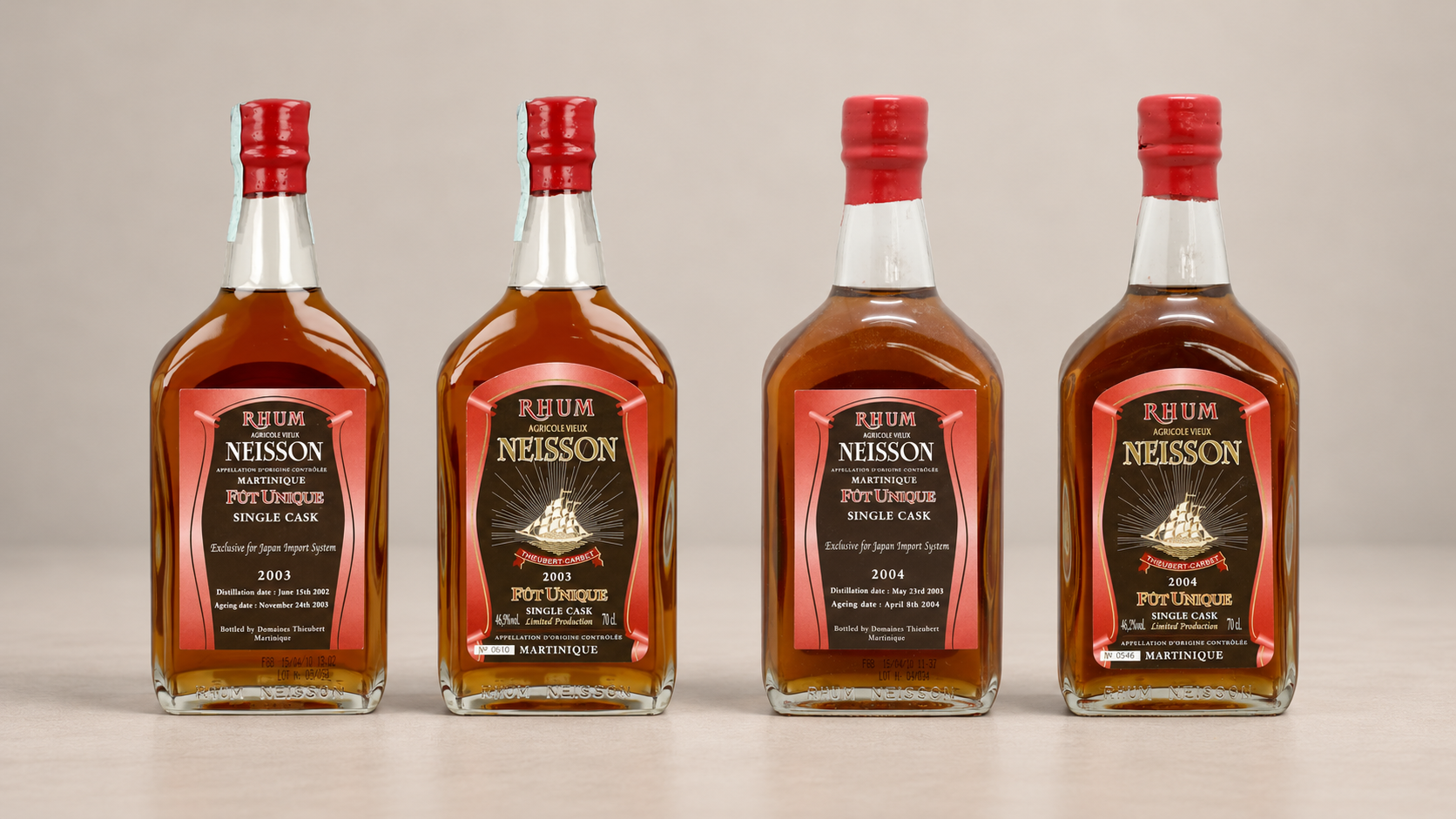
The explanation lies in the distillery's practices at the time. As Grégory Vernant once told us: "Back then, we sometimes still left the rums to rest in large wooden vats before transferring them to casks for ageing, hence the one-year difference."
The Neisson 2003 was therefore not placed into casks for ageing until November 24, 2003, more than seventeen months after distillation. The same applies to the 2004, distilled in May 2003 and placed into casks on April 8, 2004. The vintages printed on these bottles therefore appear to refer to the year ageing began, rather than the year of distillation.
A little curiosity that could easily have gone unnoticed. Fortunately, Neisson had taken care to include both dates on the labels, allowing us to trace the journey of these rums with precision today. And for those enthusiasts who pay close attention to such details, here are two vintages that aren't quite as old as their labels might suggest :)
Neisson's First Japanese Single Casks
The selections made for Japan Import System marked an interesting chapter in Neisson's recent history. With these bottles reserved for the Japanese market, the distillery began exploring single cask bottlings, an approach that was still relatively unusual for Neisson at the time.
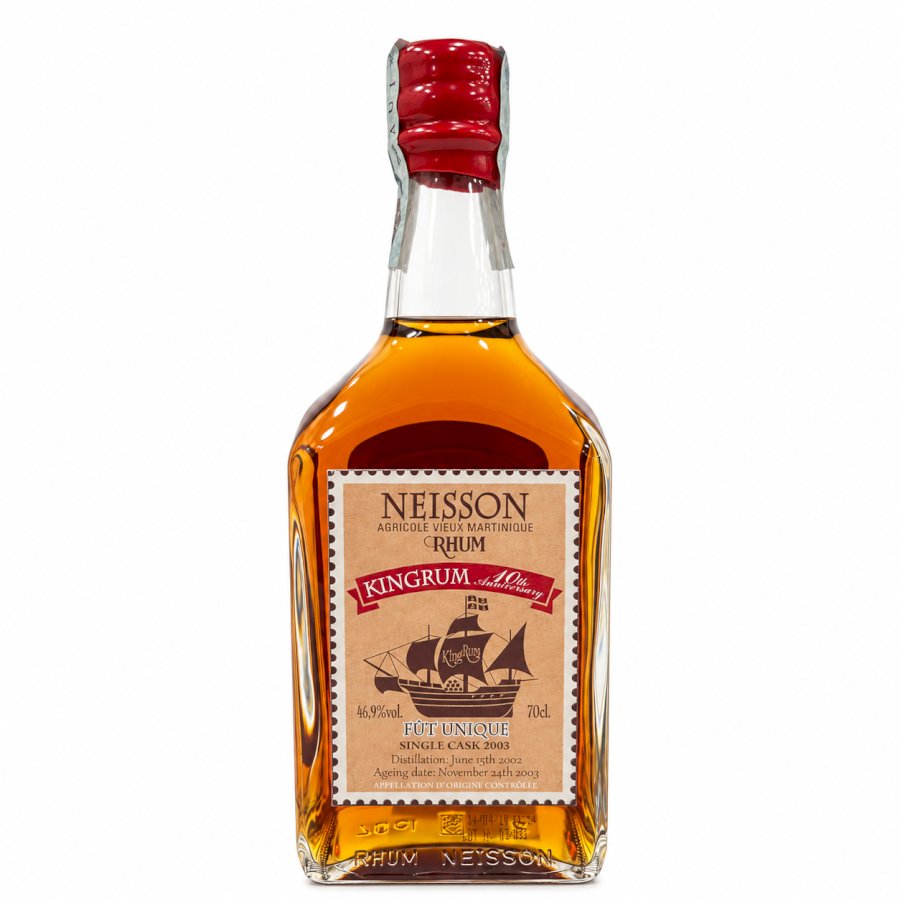
The first two well-documented releases are the Neisson 2003 at 46.9% and the Neisson 2004 at 46.2%, both presented in the distinctive Zépol'Karé bottle, with red wax seals and specially designed labels. They reflect the encounter between Neisson and Japanese rum enthusiasts with a particular appreciation for this type of selection.
But the story of these bottlings doesn't end there... We also came across another version of the Neisson 2003, this time featuring a commemorative KingRum 10th Anniversary label.
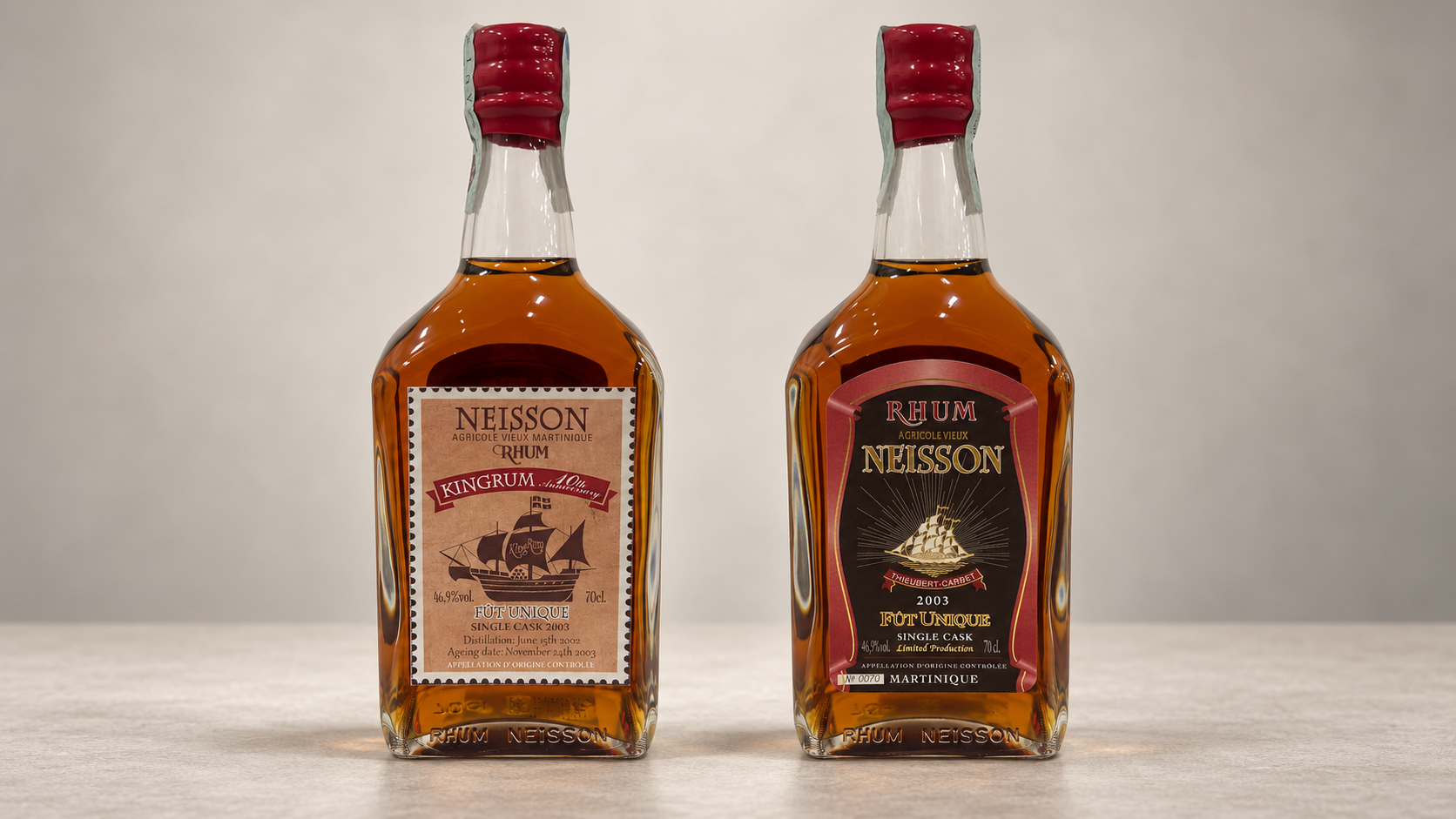
( Neisson 2003 "KingRum 10th Anniversary". This Japanese variation shares the characteristics of the Neisson 2003 selected for Japan Import System, featuring a commemorative label created to celebrate the tenth anniversary of the KingRum bar in Tokyo )
KingRum is not an independent bottler, but a rum bar located in the Ikebukuro district of Tokyo. This variation offers a glimpse into how a relatively obscure bottling found its way through the Japanese rum community and, a few years later, became part of a special anniversary celebration.
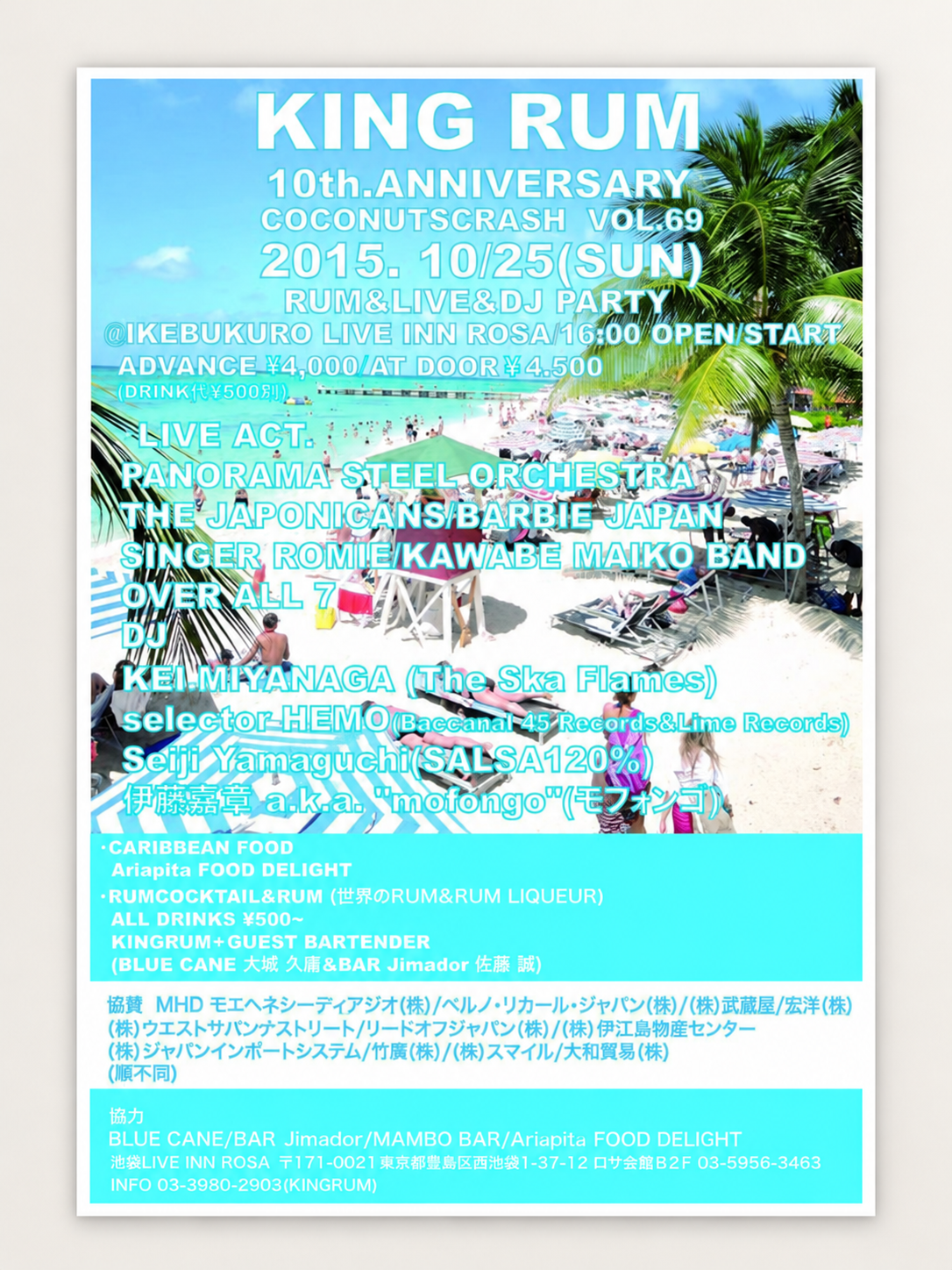
( Poster for the "KING RUM 10th.ANNIVERSARY" party, held in Ikebukuro on October 25, 2015 )