


1 Bottle 1 Story : Lameth 1886

Chantal Comte is not only a talented selector, she also became an antique dealer during her career. Back in the 1990s with the story behind a certain Lameth 1886…
Epicurean, passionate, in constant search of the rare pearl, Chantal Comte is a pioneer who knew how to promote agricultural rum when it was needed most. She discovered this world very early, at the dawn of the 1980s, by visiting numerous distilleries in Martinique and having access to memorable vintages, notably through a certain André Depaz.
While she had already released her very first selections, she received a call that was surprising to say the least in the early 1990s…
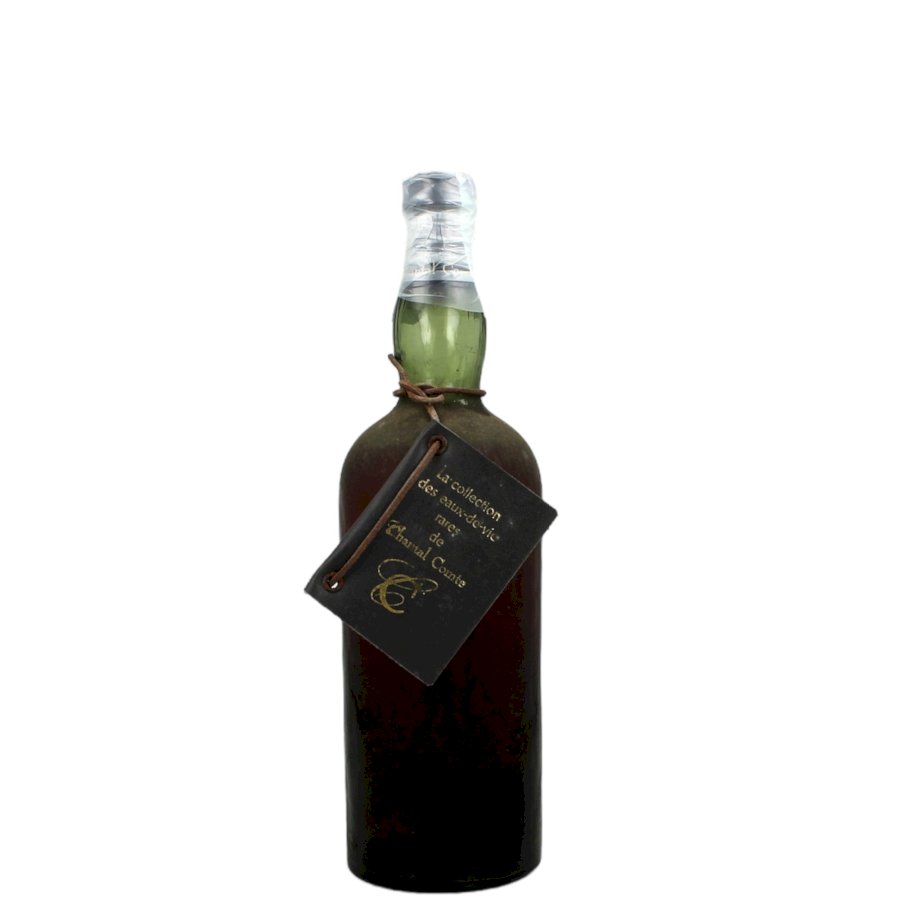
The man on the line knows that she knows something about rum (he calls on the advice of Gault & Millau). He has just carried out work in a castle in Burgundy and discovered, hidden behind the period wallpaper, a cupboard containing 52 bottles of rum... Abandoned on a shelf, they are full of dust and literally stuck. The levels are uneven, the caps completely porous (like watering cans, Chantal Comte would later say) but we can already discover some information on the outdated labels: the name Lameth can be seen, and a date, 1886.
Rightaway, Chantal Comte hurries and goes to the site of the discovery. For the record, the Chateau where she goes has precisely the same name as the one where she carries out her activity in Nîmes: the Château de la Tuilerie. In her enthusiasm, she appraises and, no doubt, overvalues the rum, a bottle of which she soon brings home. Barely recovered from her emotions and still in shock, she will call the discoverer back the next day to make him an offer on the entire lot, and is already committed to selling them throughout the world.
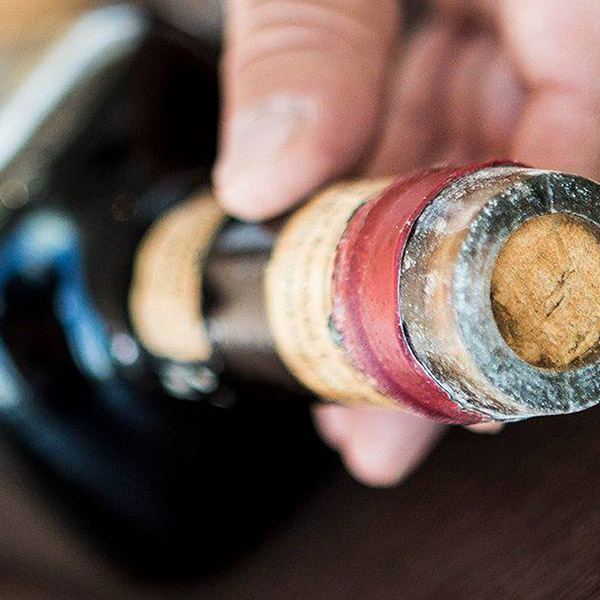
Long and tedious research will follow to find the history of these Lameths from 1886: at the time, Chantal opened an international investigation but nothing more will be revealed, except the genesis behind the discovery: the bottles were in fact brought back from a trip to South America (probably from the equator) by the great-grandfather of the daughter of the master of the house who, leaning against one of the walls of the castle, discovered the first a slot, then the shape of two doors hiding our mysterious cupboard. Bottles which, according to the history found by Chantal Comte, were recorded for the last time in an inventory dated 1910. After expertise, it was confirmed that the bottles, mouth-blown, were manufactured around 1860, and that the cork was a hundred years old.
The story behind Lameth
This bottle of rum will undoubtedly have been too confidential to raise more recent research against it. However, we are sharing with you new elements which will definitively lift the veil on the origin of this Lameth 1886…
First of all, let's take a moment to look at the name itself: it refers to the name of a family descended from the French nobility, originally from Picardy, which distinguished itself from the 14th century to the 21st century. The “de Lameth” will thus have received the honors of the court (the family has been of chivalric origin since 1302), some of its members distinguishing themselves during the French Revolution.
From this long line, one family member will particularly attract our attention: a certain Alfred de Lameth, born April 18, 1842 in Henencourt in the Somme. Count then Marquis of Lameth, he became (through his wife, heiress Chalvet) the owner of Habitation Chalvet which already produced rum in Basse-Pointe, in Martinique.
He registered the trademark “Rhum Authentique de l’Habitation Chalvet, property of the Count of Lameth”, on July 6, 1887, as shown in this extract from the Official Bulletin of Industrial & Commercial Property of the time: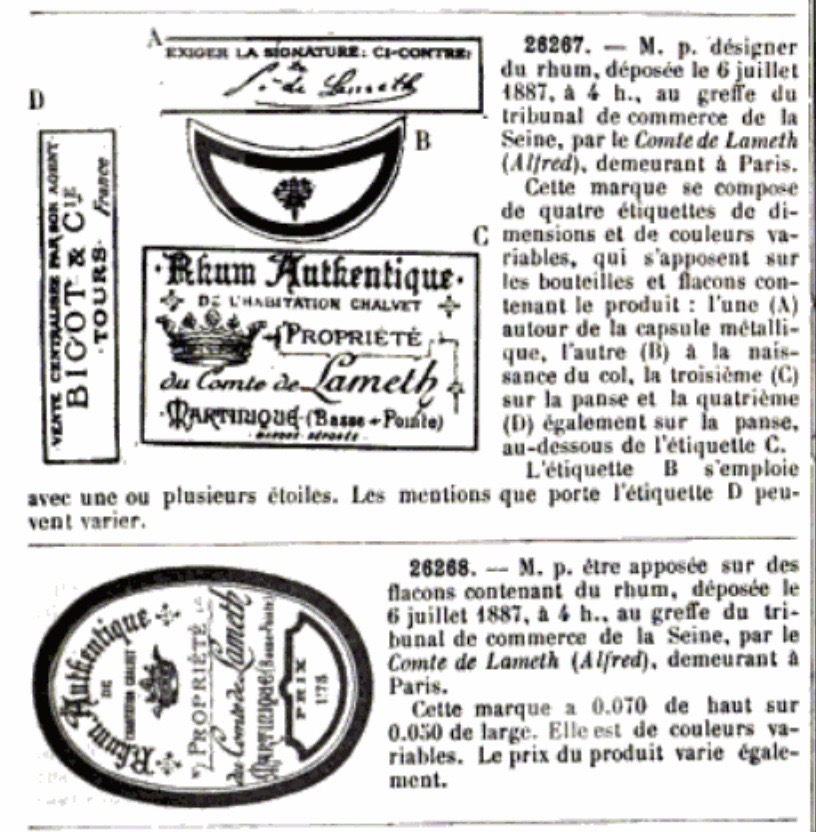
In 1898, he owned a rum warehouse in Ruffec/Londigny (capital of the canton of Nord Charente) from where he marketed his rum via Angel Devergne, his importer. The latter continued the business upon the death of the marquis in 1916.
Several products are sold (rums and Schrüb) which have won medals in numerous competitions (first major gold medal in 1884 in Lyon, silver in Le Havre in 1887, etc.), as shown in this period advertisement, where his title of marquis (acquired in 1904) will advantageously replace that of count: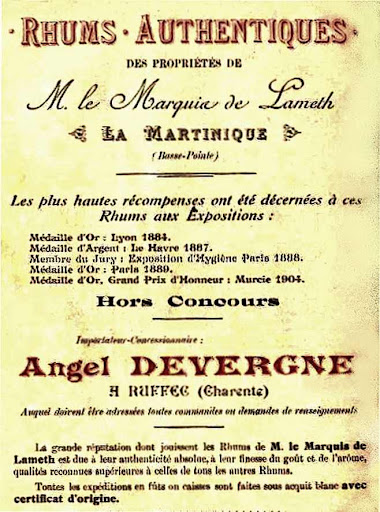
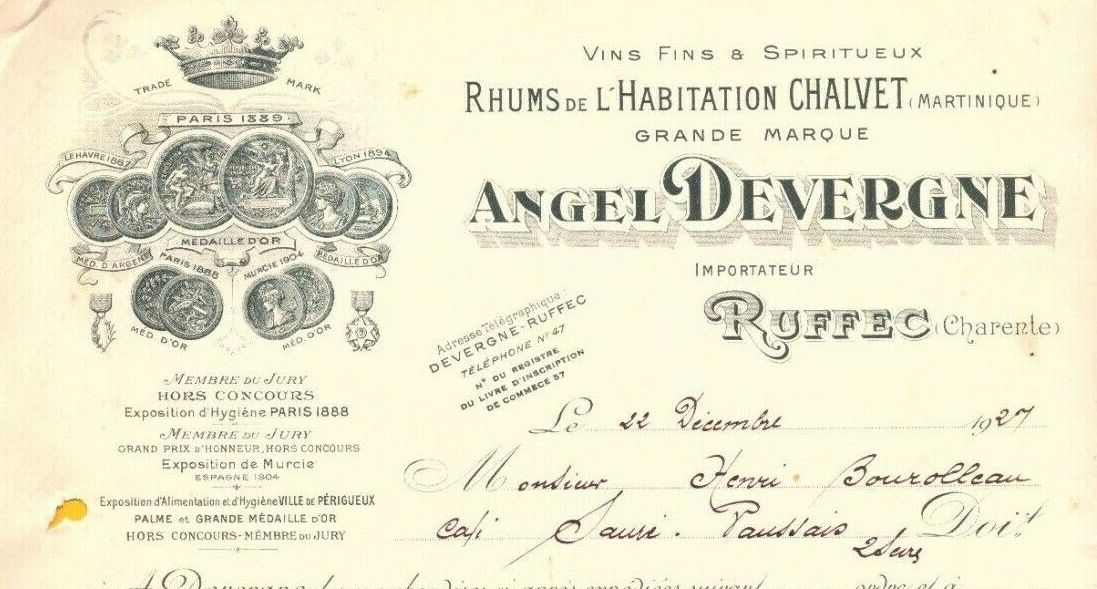
Other documents (invoice from the 1920s) mentioning the Angel Devergne company, which continued to sell Habitation Chalvet rum after the death of Marquis Alfred Lameth in 1916:
Habitation Chalvet, genesis of Lameth rum
The history of Habitation Chalvet dates back to the 17th century when a concession measuring “800 steps wide by 1000 steps high” (which gives approximately 600 meters by 762) belonged to a certain Guillaume Pinel. The latter is presented by Father Labat as "former militia captain retired to Martinique as a merchant owner of sugar houses and then a buccaneer", information which will later be denied by his descendants. From 1688, the house passed into the hands of Claude Pocquet (militia captain of Basse-Pointe, advisor to the Sovereign Council from 1688 and secretary to the king in 1703) and included up to three sugar factories. Then it was his heirs who took over from 1722 and retained the estate until the end of the 18th century.
In the first years of the 19th century, the Habitation passed into the hands of the Chalvet family, who kept it until the middle of the 19th century, when our count and not yet marquis Alfred de Lameth officially made his appearance. He will market the rum produced at the Habitation by having his goods delivered to Charente.
In 1919, the House was sold to Louis Marie Joseph Léo Clerc, whose family owned the Vivé du Lorrain factory as well as other houses in the region. The Chalvet dwelling will serve them, like many others, to supply raw material (cane) to the factory, then to cultivate bananas from the interwar period. At that time, peanuts, cassava and red and white beans were also grown there. The second half of the 20th century was marked by the strike of February 1974, during which workers were injured by the police, another shot by gendarmes, and a second found dead the next day without anyone knowing. was able to determine the exact causes of death. Three years later, Mr. Aubéry Albert became the owner of the house which he had until then been renting. After growing yams and horticulture in greenhouses, the Chalvet farm today focuses on bananas and pineapples.

above, the remains of the Habitation Chalvet sugar refinery. Crédit photographique © Inventaire général, ADAGP ; © Conseil régional Martinique
Return to our LAMETH 1886 bottling
Now that the origin of our rum has been found, let’s return to our bottling…
Chantal thought for a while about waxing the bottles to ensure their deliveries, but resolved to deliver them as is, in their juice and above all standing up, after a neck exploded under the heat of the wax. A tragedy, but a dream opportunity to taste this piece of history! She was accompanied that day by a journalist friend (Michel Smith) and remembers a very dark dress with shades of amber and topaz, which suggests a molasses rum. After observations and much sharing with the profession, the century-old rum, which would have been distilled in 1886 in Martinique, would be an Hors d'Âge rum (with long aging) bottled at high strength, if not at natural strength. (50°).
The result is a spirit that has retained its splendor, “combining the sweetness of vanilla and the fire of spices, as well as fruity and roasted aromas”. Still according to Chantal Comte, the mouth displays “unctuous tannins and abundant aromatic freshness, punctuated by an exceptional length on the palate”.
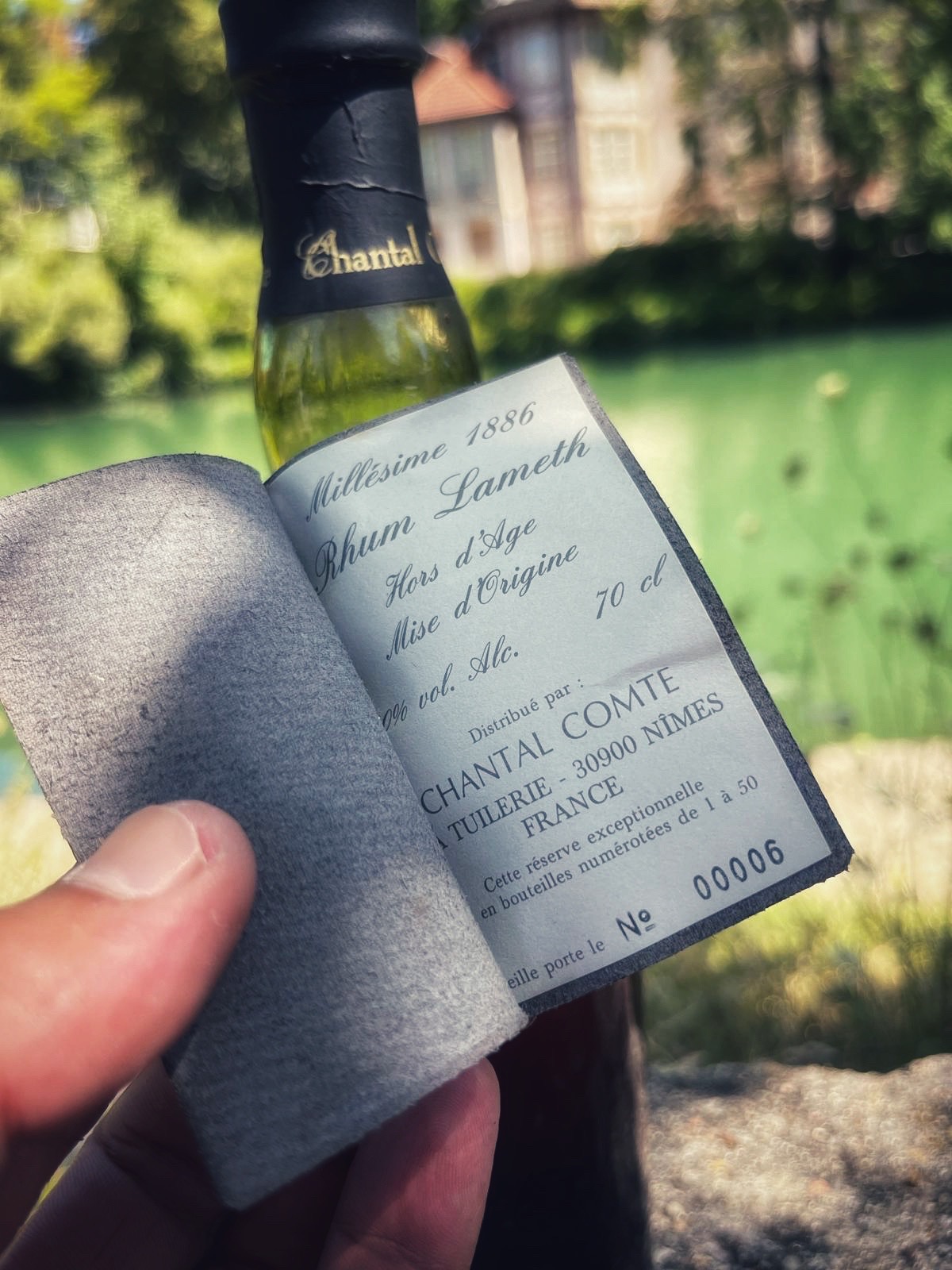
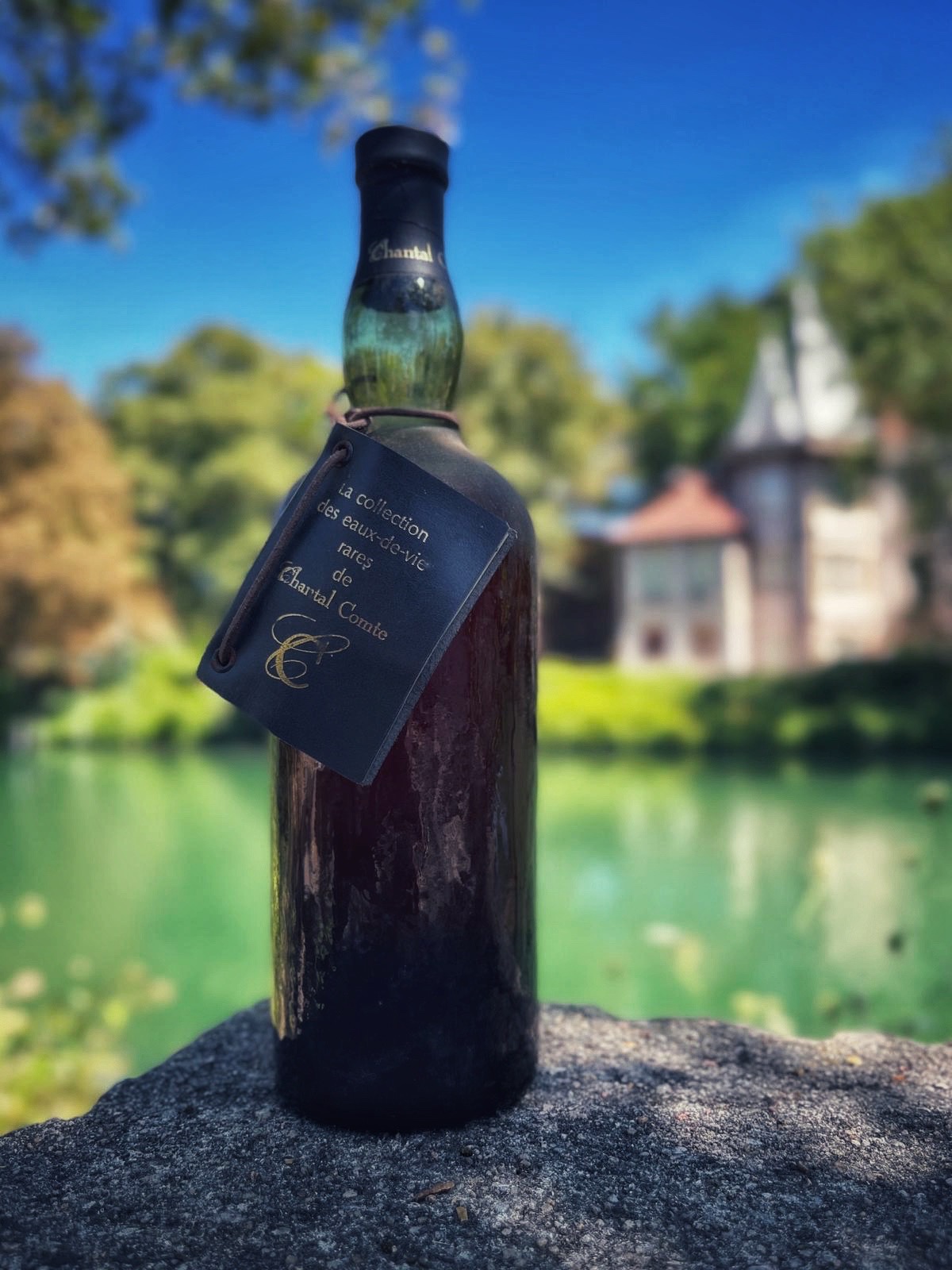
In view of the fragilities observed, it was finally decided to market the Lameth 1886 (October 7, 1992) in their original state, with the only addition being a small leather booklet attached to the neck of the bottle. Entitled “The collection of rare eaux-de-vie by Chantal Comte”, the numbered booklet announces an “Unknown origin”. And to leave nothing to chance, each relic is precisely nestled in a precious wooden box, labeled with leather, and made by hand by a craftsman ("whose marquetry is made of seven exotic woods: Asian mahogany, cherry and American Walnut, Badi, Frake, Framisé, and Amasakoué from Africa.”). And since the cork, a hundred years old, is also original, each lucky buyer is also offered a bladed corkscrew, an essential companion, as well as a spare cork.
To the great surprise of Chantal Comte, the 52 bottles were quickly sold, despite a relatively high selling price for the time (around 500 euros).
A bottling as historic as it is legendary, this Lameth 1886 will in any case leave its mark on the rhumatic beginnings of Madame Comte. Adventures which continue to this day and which have left their mark on many demanding enthusiasts. The opportunity for us to come back soon with new stories to tell…