

introduction to armagnac
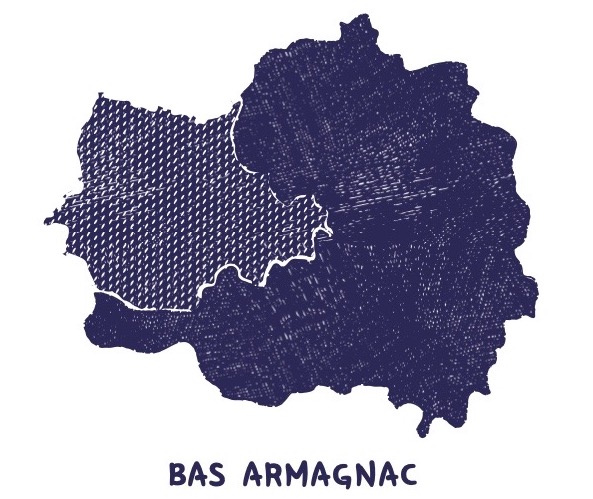
BAS-ARMAGNAC extends over part of the Landes and Gers and represents a total of 74.4% of the areas identified in Armagnac, i.e. 1,665 hectares. Its terroir is characterized by sandy loam soils (we speak of tawny sands).
Located to the north-west of Gers and south of Lot-et-Garonne, ARMAGNAC-TENAREZE covers 24.2% (542 hectares) of the surface with soils Boulbenes and clay-limestone bringing an additional palette to Armagnac.
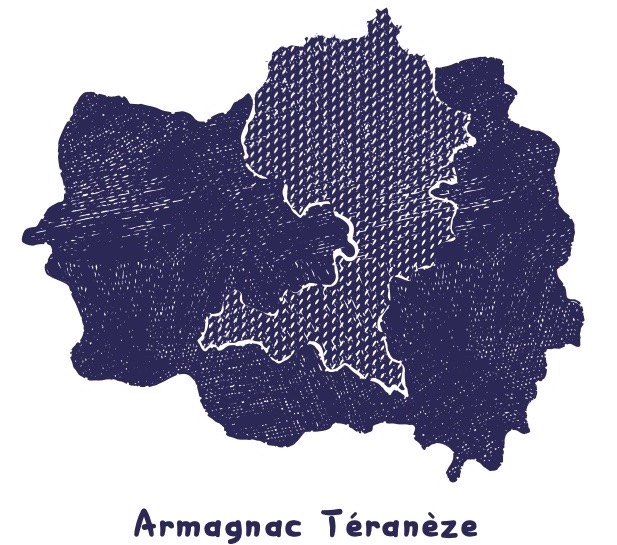
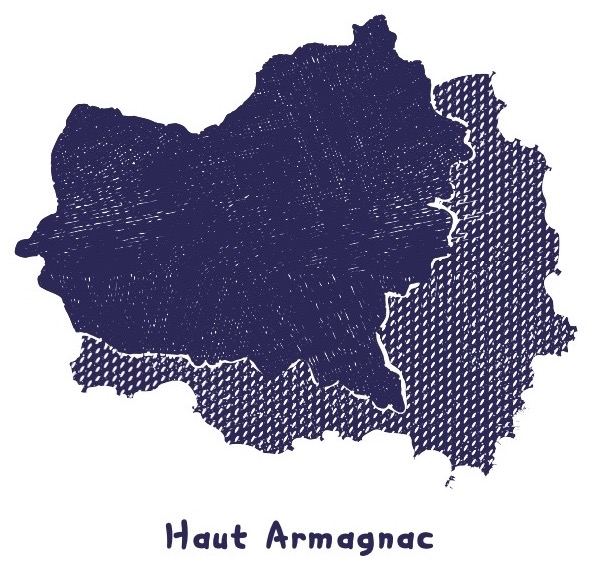
Finally, HAUT-ARMAGNAC, nicknamed “Armagnac Blanc” because of its limestone soil, takes root east of Gers and in part of Lot-et-Garonne.
Despite strong development in the 19th century, few producers still maintain the production of Armagnac there.
There are only 31 small hectares left, or 1.4% of the total grape varieties.
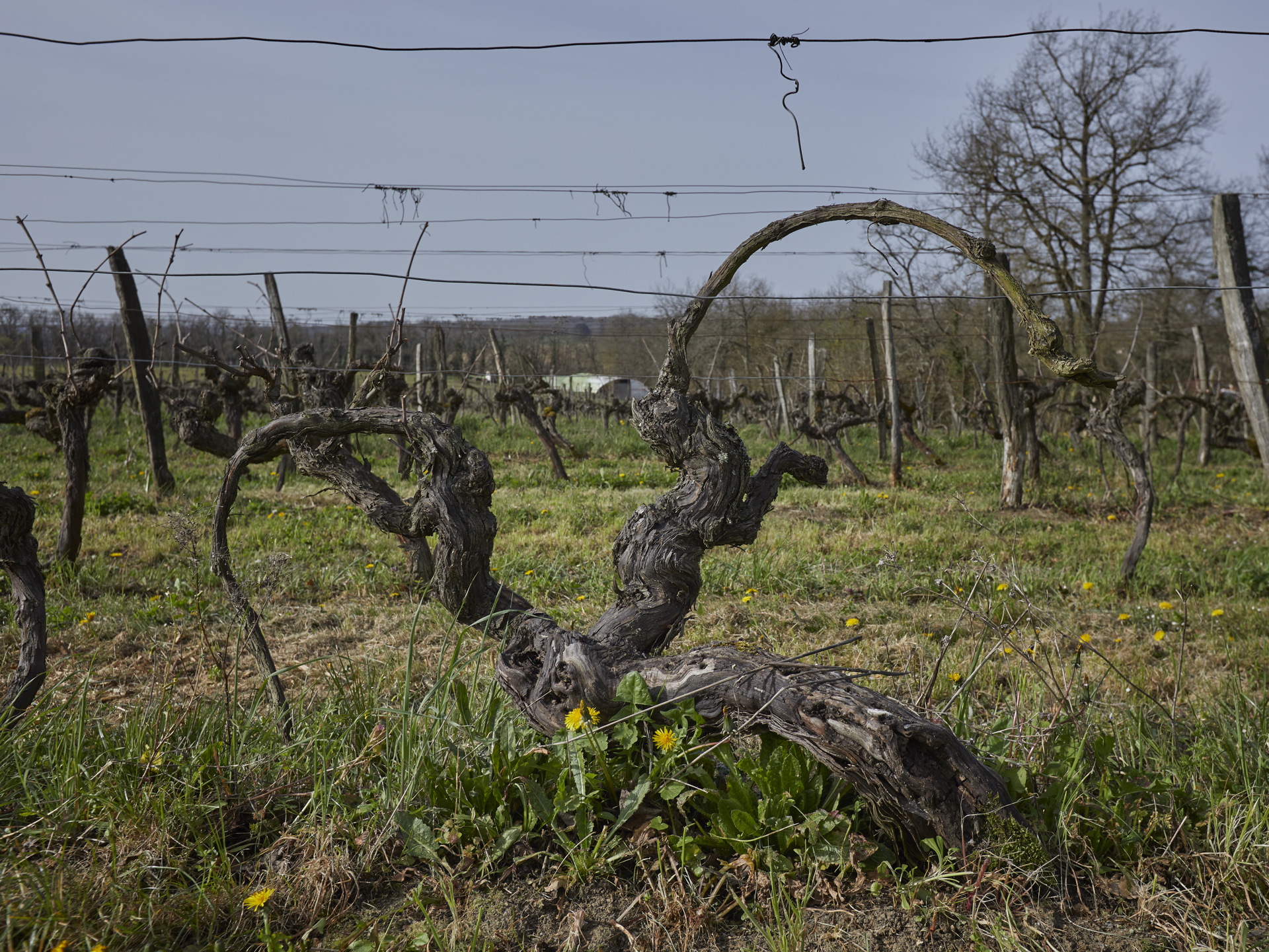
Regarding the grape varieties used, Armagnac stands out once again by advocating diversity and adaptation to the terroir. If Ugni-blanc reigns supreme (it is used at more than 47% on the areas affected in 2021/2022, i.e. 872ha out of 1838ha), it is gradually being caught up by Baco, which monopolizes 34% of the land allocated to the production of Armagnac (639 hectares, +7%). Invented by a teacher from the Landes, it shares with the ugni blanc an ease of adaptation and resistance to any (or almost) test.
In addition to these two grape varieties which represent more than 80% of the grape variety, the most adventurous producers can still count on eight other grape varieties to diversify their production and bring unique profiles to their eaux-de-vie. Often neglected because they are less robust and productive, they are nevertheless a strength for Armagnac and its AOC, as long as you venture there:
Colombard, valued in the vinification of Vins de Pays from the Côtes de Gascogne, comes in third place with its 237 hectares (i.e. 13% of the land allocated to the production of Armagnac), followed by the famous Folle Blanche: a historic grape variety, Folle Blanche (or "piquepoult") still dominated the Armagnac vineyards before phylloxera destroyed everything in 1878. Since then replaced by Ugni-blanc and Baco, it now represents 4% of the vineyards... i.e. 75 hectares in 2021/2022 (compared to 107 hectares previously).
The rest of the grape varieties used are more than confidential: Plant de Graisse, Clairette de Gascogne, Jurançon Blanc, Meslier Saint François, Mauzac Blanc or its counterpart Mauzac Rosé total sixteen small hectares of land...i.e. 0.8% of the grape varieties used for the production of Armagnac. Even if they have in common to be natives of the surroundings, they are shunned for their fragility and their yield and have never really had a chance to shine in the profession, the winegrowers preferring the robust Baco (local hybrid grape variety) and Ugni Blanc (of Italian origin), and to a lesser extent the very Charentais Colombard and Folle Blanche.
It should be borne in mind that most of these grape varieties are only grown on a few ares: to give you an idea, one are is equivalent to 0.01 hectare... They survive today only thanks to the pugnacity of certain -irreducible- producers who make it a point to reintroduce them on their land. You will discover it soon enough over the pages and portraits of producers :)
To continue the comparison with Cognac, ugni blanc is used in 98% of cases, even if it shares in common with armagnac the cultivation of Colombard, Folle Blanche, Meslier Saint François and Jurançon Blanc.
A SINGULAR & REMARKABLE DISTILLATE

Distilled in a traditional handcrafted copper still, Armagnac is unique in the world of spirits. Carried out mainly in a “continuous” way, i.e. constantly fed with the mixture to be separated, distillation requires a constant presence and a very particular know-how. The art of the distiller then lies in his dexterity and in the perfect knowledge of his still, the mastery of whims and heat strokes, the scrupulous monitoring of temperatures. We will dive more into this magic that takes place and the alchemy between man and his machine, but keep in mind that here everything is manual and that the human presence is necessary from the first to the last drop. Batch distillation is also authorized but remains exceptional (3% of annual production in 2020), in particular because a producer is obliged to first distil continuously before being able to do it batchwise.
At the end of this constant battle, the crystalline eau-de-vie that will come out of the still - called the Blanche - holds a place in its own right in the world of spirits: exceptionally aromatic, it comes out of the still between 52% and 60% (even if the AOC authorizes up to 72.5%), guaranteeing it organoleptic characteristics that are far beyond (and that's an understatement) of its colleagues. The levels of non-alcoholic elements (at the origin of the aromatic palette of the eau-de-vie) give it an identity and a strength that only very rare - and no less exotic - eau-de-vies can envy: let's mention for example the Clairin from Haiti (local white rum), the artisanal Mezcal or the Grogue from Cape Verde; or even certain rums from Martinique where the AOC imposes a distillate between 65 and 75%.
Around these few (too rare) exceptions gravitate excessively distilled spirits, closer to ethanol than to an eau-de-vie with character. Some spirits, like light rum which sits on supermarket shelves, are distilled up to 95%, annihilating any aromatic identity and pushing large firms to sweeten them.
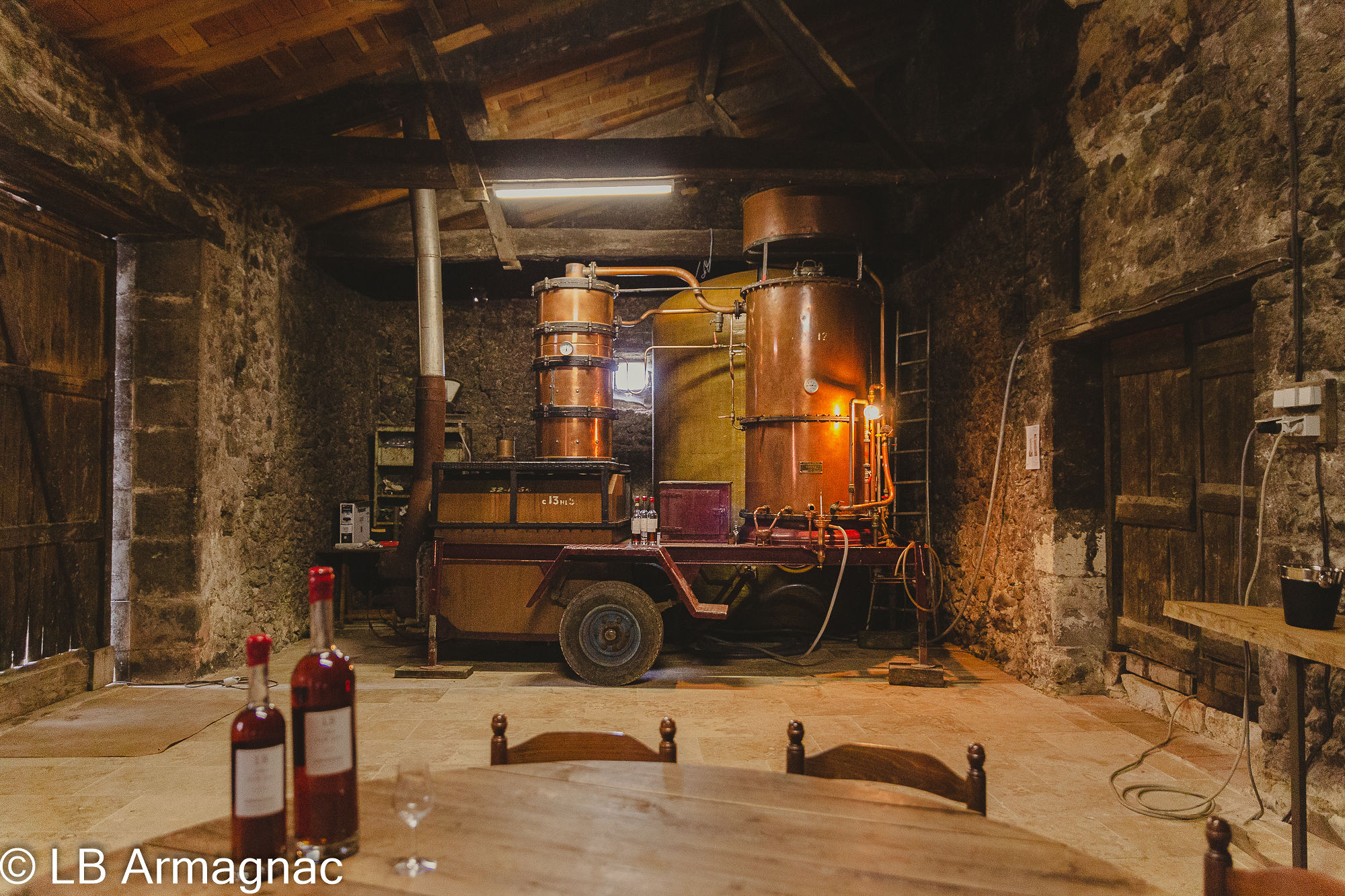
In the small world of Armagnac, the moment of distillation is a moment of sharing and celebration. While some distill on their own still, many still use itinerant distillers who come to distil the wine at home. Each distillation has its share of encounters and festivities. Each distiller has his aura and his secrets. A synergy and a unique bond unites them, makes them live, even survive. There are only a handful of them left, but through their devotion they allow Armagnac to continue to live. We offer you on the site to discover the last itinerant distillers. Listen to their stories, they are fascinating...
ARMAGNAC: THE EAU-DE-VIE WITH 2 AOC
Armagnac & Blanche Armagnac
A guarantee of quality if any, the AOC Armagnac has even officially recognized its white eau-de-vie since 2005 (understand unaged, the aptly named Blanche d'Armagnac), a unique case in France since neither Calvados nor Cognac have dared to take the plunge. The eau-de-vie in its natural state, the most raw and primary, reflects the quintessence of the raw material.
LINK to the AOC text
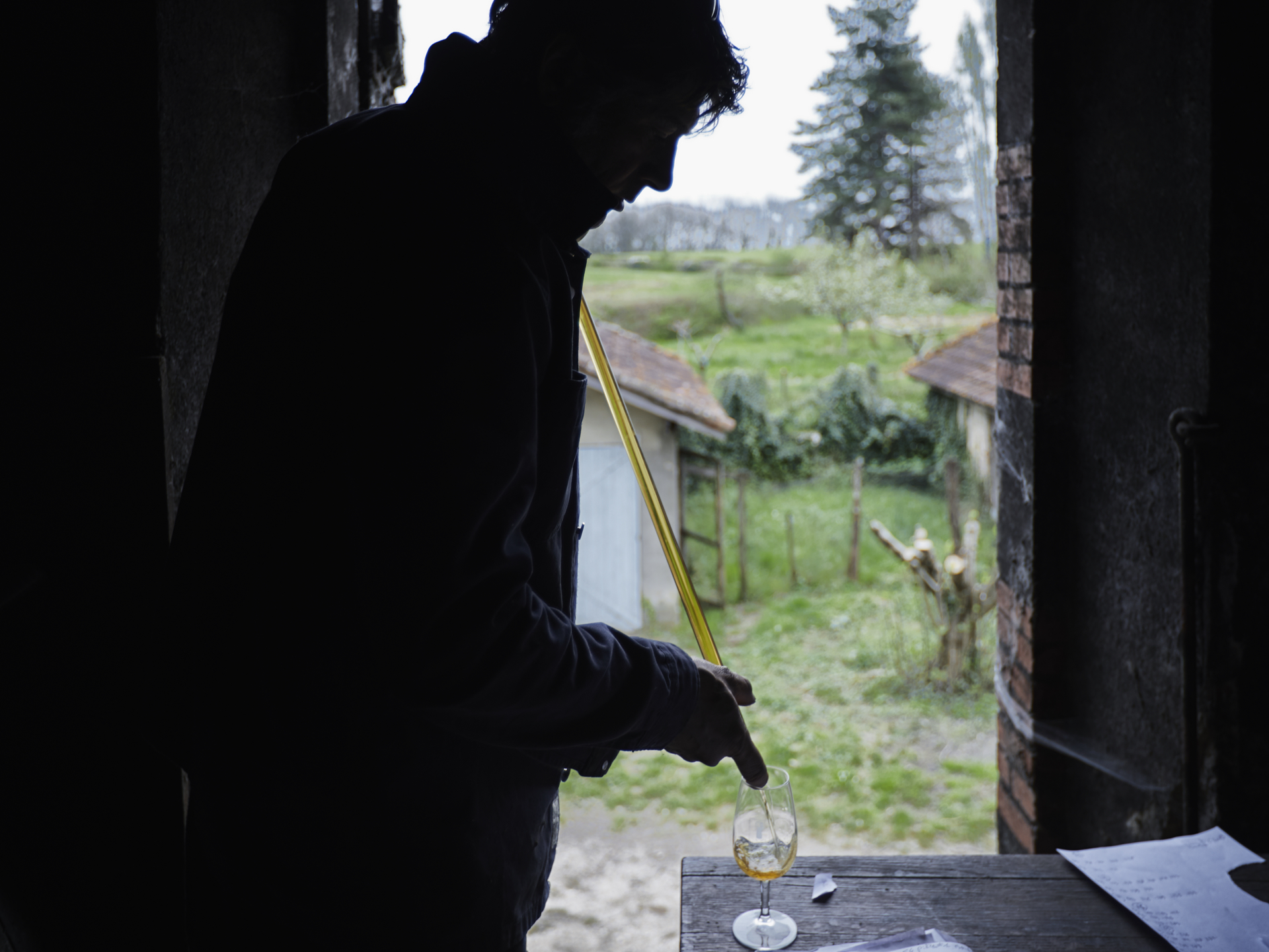
Once born, the white will be housed in oak barrels most often "raw still", understand without dilution, leaving its copper habit to marry that of wood, in its original strength. And as Armagnac does not decide anything like everyone else, it has chosen for its long sleep barrels only made from sessile, pedunculate oak or their cross, and in no case authorizes the use of other essences or barrels that have previously contained other alcohols. Producers are free to decide otherwise, but leaving the AOC.
The wood used to make the barrels comes from the forests of Gascony and Limousin, when it does not come directly from the forests surrounding the producing estates. Traditionally, Armagnac will first rest in new barrels before moving into older barrels to continue its aging, but you will see later that the richness of Armagnac is ultimately endless.
A CONFIDENTIAL PRODUCTION IN A CONFLICT WORLD
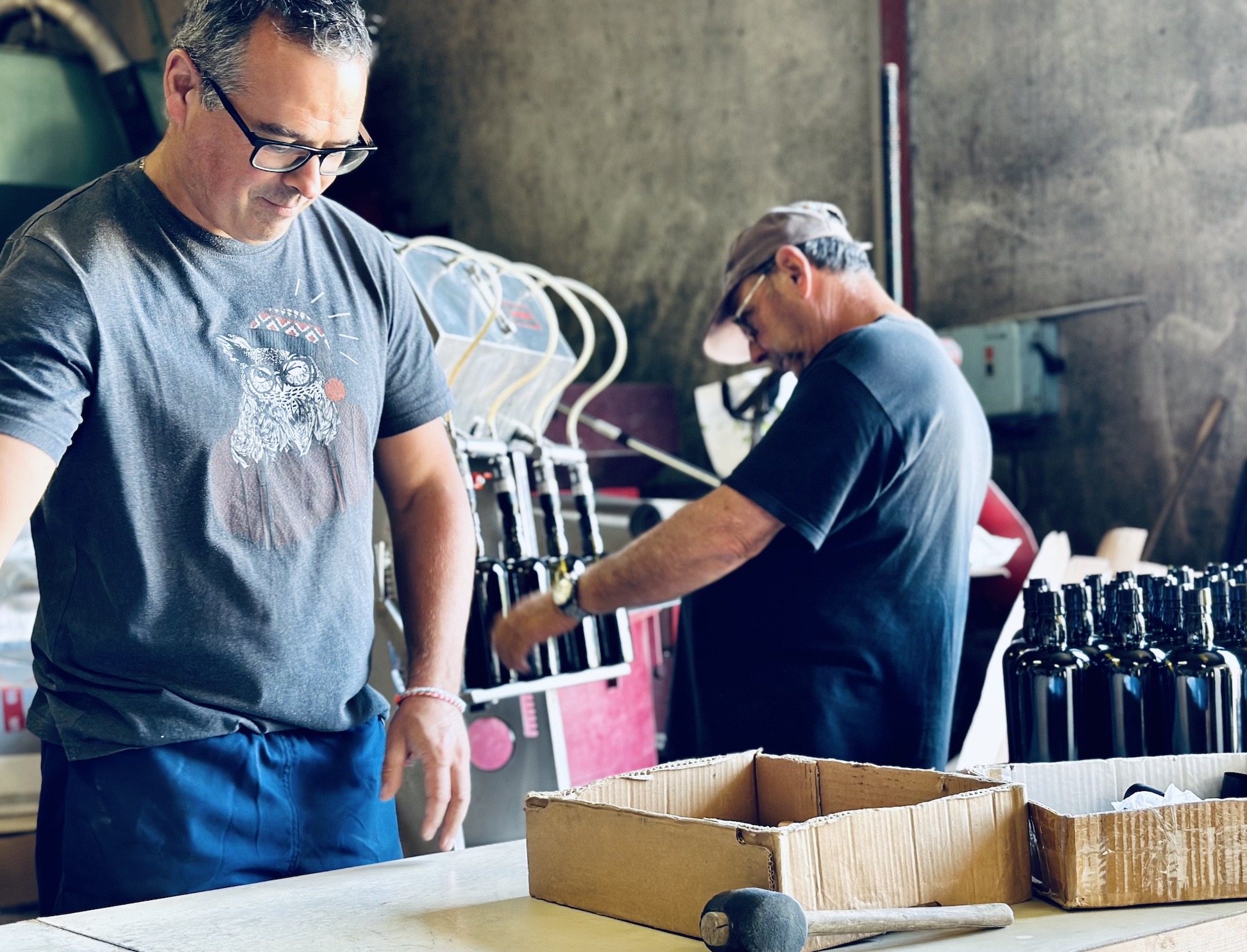
Each year, a producer ages the equivalent of a few barrels, two, sometimes five, or double in good years. For eaux-de-vie which will generally only be marketed from a minimum of ten years for the vintages, sometimes 15 and even more.
In 2020, Armagnac production amounted to 7,842 hectoliters of alcohol, or approximately 2.8 million bottles. By way of comparison, cognac had sold 75 times more the previous year and the equivalent of 220 million bottles.
It's all a question of time and resilience, but good news for the world: Armagnac is not only patient, it is also very tenacious.
Armagnac is dead, long live Armagnac.