

The wine in heritage
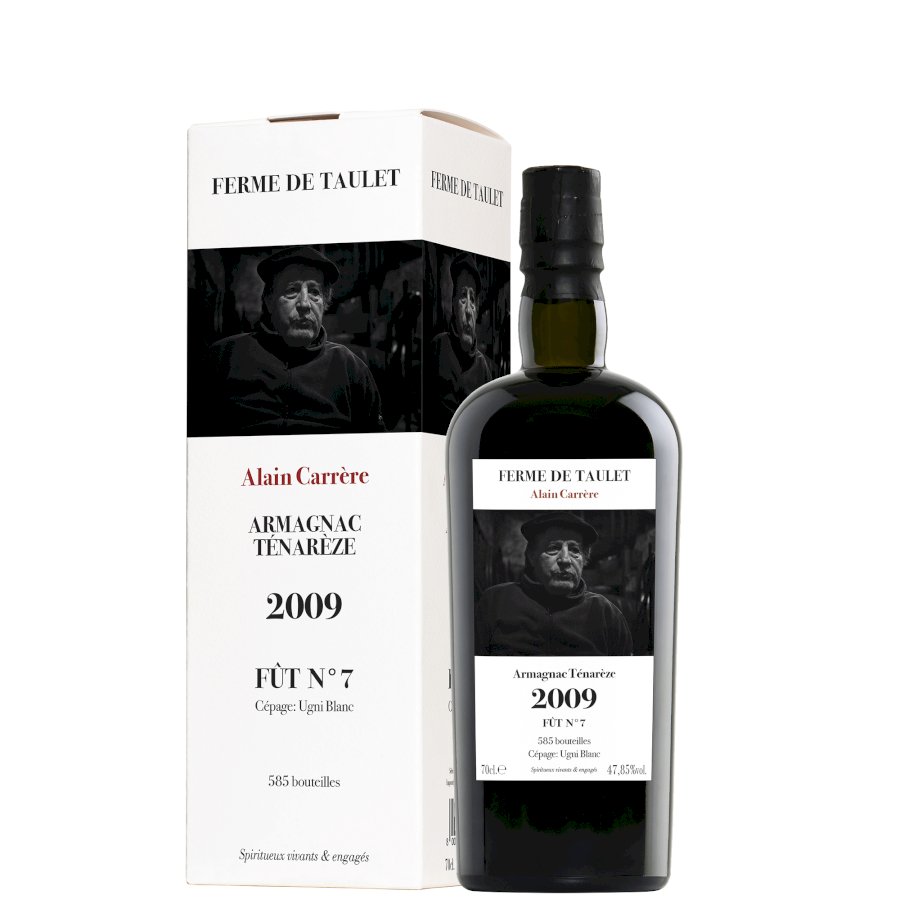
Located in Ténarèze, the Ferme de Taulet is a popular place of passage with both pilgrims (the GR65 crosses its farm) and lovers of good things. Alain Carrère operates a small vineyard of less than 3 hectares, two-thirds of which are used for the production of Armagnac.
As faithful to traditions as to his old vines, which he has been working with for more than 60 years, Alain is inhabited by a resolutely biodynamic philosophy and works as naturally as possible.

Located in Ténarèze, Alain Carrère's farm offers, in addition to the production of Armagnac, a Gascon beef farm and a lodging for pilgrims to Santiago de Compostela whose famous GR65 crosses its farm. Its small vineyard is made up of less than three hectares of vines, two-thirds of which are used for the distillation of Armagnac, the rest being used to produce aperitifs, sparkling wines and a natural wine as exceptional as confidential.
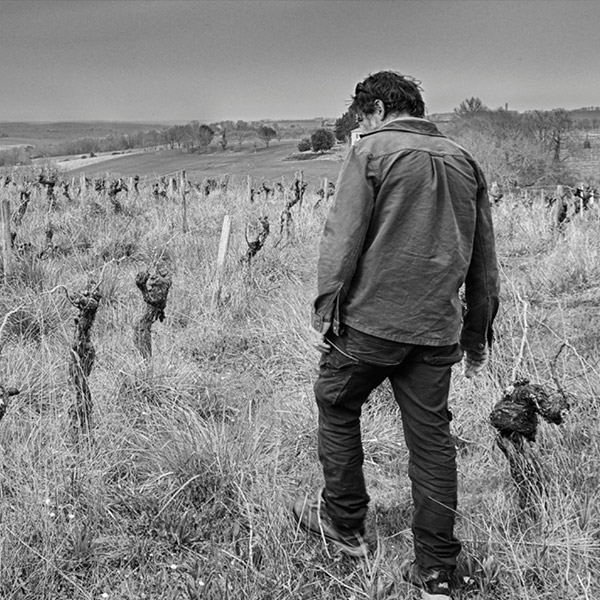
In organic farming for several years, Alain holds his vineyard as the apple of his eye and his old vines are pampered like his own children. Planted when he was only five years old, in 1962, he presents them to us with pride and an emotion that we imagine still intact from the top of his sixty-five springs. Born here on the family farm in Taulet, he tells us that he was already working the vines at the age of twelve with his father. That before that, there were only cherry and peach trees on the farm and a few vines here and there.
In the early 1950s his father began to plant more vines and the first drops of Armagnac flowed for the very first time at the Taulet farm. Distillation then takes place in the village square, where each winemaker brings back their wine and then leaves with their barrel duly filled. The Armagnac thus produced is not yet marketed but intended for family consumption. The following years will mark a turning point for Alain who quickly becomes passionate about Armagnac and distillation, with already a well-established idea: that of keeping the vines he has seen growing as long as possible, to maintain the family heritage that he intends to bequeath one day to future generations.

This is undoubtedly where the secret of his Armagnacs lies, in the almost religious care he gives to his old vines. Alain Carrère is a special character, as faithful to traditions as to his grape varieties and their immediate environment. Inhabited by a resolutely biodynamic philosophy, he works as naturally as possible, in phase with the moon, and would not change for the world. Its vineyard, grassed for more than 35 years, is composed of two grape varieties: Ugni Blanc for 85%, and 15% of Colombard. The pruning of the vine is late (end of February/beginning of March) and is always carried out in the waning moon for better growth. At the end of June, when the vine has grown well, and still in a waning moon, it cuts off the greedy ones.
After making sure of the good acidity of his grapes, he then determines the date of the harvest which varies according to the year from September 15 to 20. Entirely manual, it is carried out with the help of volunteer pilgrims on the way to Santiago de Compostela: there are thus between twenty and twenty-five - some of whom are regulars - to participate in the harvest but also in the preparation of the aperitifs. Alain pays them on a fixed basis, offering them board and lodging during the harvest, not forgetting to pass on his passion to them.
The pressing is carried out using a horizontal press then the juices are stored in vats for natural fermentation (without any addition of yeast) which will last from 8 to 15 days depending on the outside temperatures. January arrives and the distillation which will mark the end of a year of effort: first week of the new year, Patrick and Xavier Mogni arrive at the farm with their nomad still to distill Alain's wine. Except for the year 2022 when the wine was distilled a little higher than usual (at 60%), Alain generally asks for a distillate between 56 and 57% to keep the maximum aromas. Here as elsewhere, distillation is conducive to celebrations bringing together family and friends, and above all the good atmosphere.

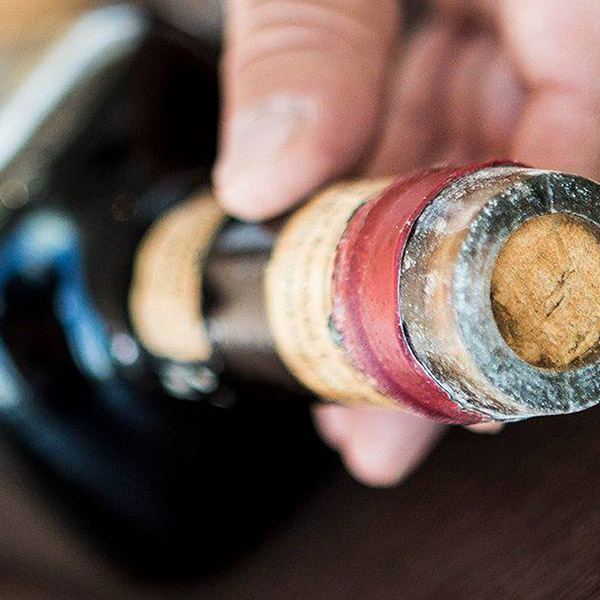
A day and a half later the distillation is finished. As every year, Alain puts a little white distillate (called Armagnac Blanche) under glass which he keeps for his personal collection, and puts the rest in oak barrels for aging. Contrary to practice, Alain first spends his Armagnac in old barrels before transferring it to new barrels for very short periods, always respecting the principle of millésime which is inseparable from his work. This will allow his Armagnac to know oak from different sources, some barrels coming from former local coopers and others from Cognac (Tonnellerie Bossuet). He produces annually enough to fill three, sometimes four casks of Armagnac that he carefully arranges in his "museum" cellar, which now has nearly 50 of them. The products he markets are diluted with small waters at 42%, but it is natural and cask-strength that Alain's Armagnacs reveal their full potential and seduce connoisseurs.
An armagnac produced by old vines that he has been growing alongside for sixty years now. And despite the low yield of the latter, Alain does not budge, he will keep them until the end, even if it means distilling only one barrel. See less. It's a matter of principle. And philosophy.
Article about Alain's Nomade Distillers: Patrick & Xavier Mogni
Products