Ferme de Bacoge
One vintage, one cask
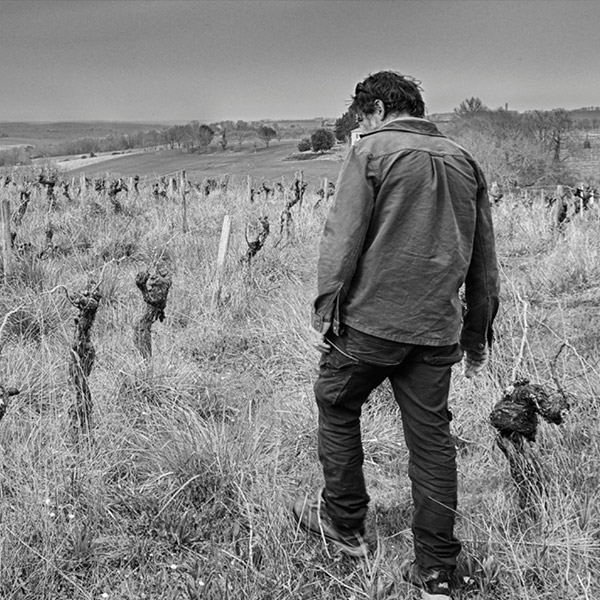
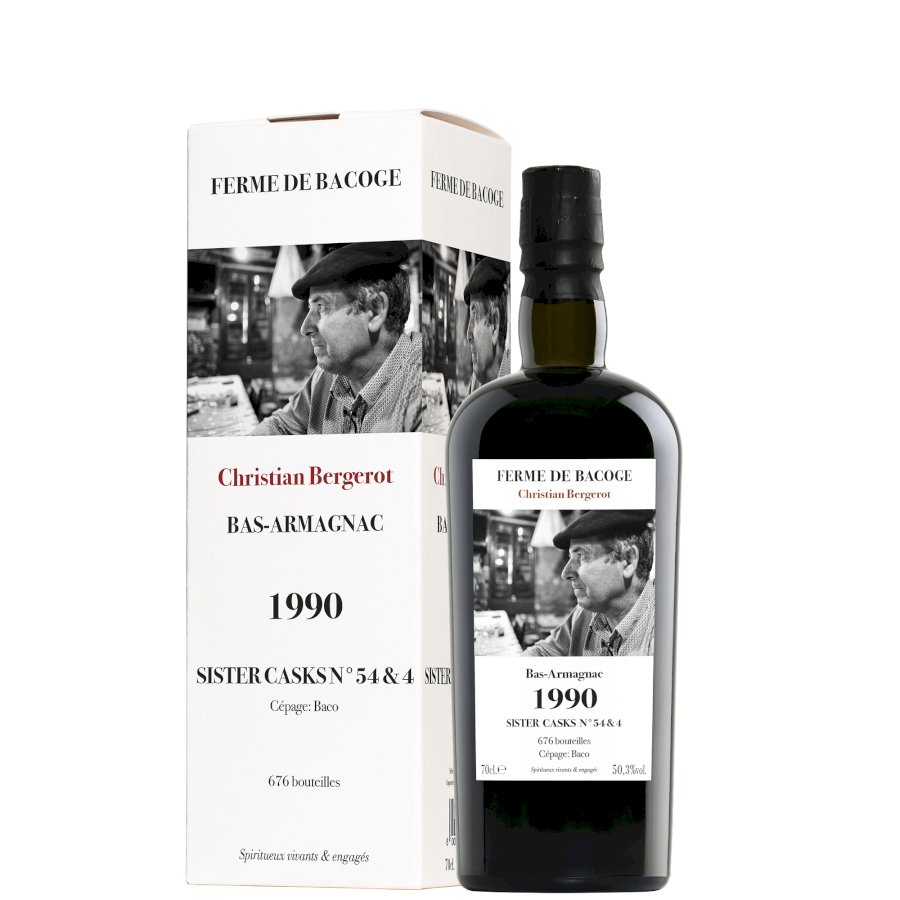
A passionate farmer, Christian Bergerot has officiated at the Ferme de Bocage since the 1980s. In the heart of the Landes, he combines the cultivation of white maize, the breeding of ducks and pampers a little less than two hectares of Baco vines intended for the production of Bas Armagnac.
Perpetuating a custom begun by his predecessor André Labrabe, he advocates the use of a single cask throughout the aging of his Armagnacs. An atypical approach that will not fail to surprise.

Proud of his roots and his profession as a farmer, Christian Bergerot is the second generation at the head of the Bacoge farm, a typical place whose foundations date back to 1760. He took his first steps as a farmer in 1983, a period in which he buys some land from André Labarbe, former owner of the Bacoge farm who quickly becomes his mentor and much more. Taking care of two and a half hectares of vines, corn crops and a duck farm, he now offers a wide range of products ranging from vintage Armagnac to the sale of preserves, all offered and marketed exclusively on his farm.
This full-time farmer, as he likes to describe himself, now dedicates a little less than two hectares (1.85 precisely) to the production of Armagnac, the rest being intended for a few red grape varieties which he resells for the production of wine. Christian swears by the king grape variety of the region, the Baco: recognized for its robustness, it is the only hybrid grape variety authorized in an AOC, invented by a Landes teacher in 1898 and resulting from the crossing of Folle Blanche and Noah, an American grape variety.

The vineyards of the farm were historically and mainly dedicated to red grape varieties (Baco then Merlot grafted on Baco) for the production of table wine and Christian will have patiently waited for the years 1986/1987 to relaunch the production of Armagnac which was in decline for several years. Because if the farm counted in its best years up to eight hectares of vines for armagnac, the vagaries and economic realities will have given reasons for the production of Baco rouge then of merlot for wine production, much more in demand at the time. Re-establishing the production of armagnac at the heart of his activity, Christian quickly went from a single barrel at the start to three barrels per year, tripling the aging process while promoting sustainable agriculture and jointly launching the cultivation of several varieties of corn, in particular white corn intended to feed the ducks that it raises in the farm.
Even if the work of the vine is permanent, the natural resistance of the Baco vine allows a constant grassing of the vines facilitating a reasoned agriculture suitable for allowing the numerous auxiliaries which colonize the vines to flourish (ladybugs, tree frogs, etc.) while using minimal treatments. Christian even voluntarily leaves his vines in bloom to the delight of schoolchildren who come to visit his farm and smell this unique and beautiful scent.
As soon as the harvest is done, the grapes are brought to the farm to be pressed and fermented in concrete vats. The inertia being much slower than in stainless steel tanks, fermentation will begin after three or four days and will go crescendo for eight to ten days. A completely natural fermentation without any addition of yeast. After three weeks or even a month, when the wine has finished its fermentation and has thinned out on its lees, around mid-November, distillation can then begin.

The still then comes to the farm through Patrick Mogni and his son Xavier, nomad distillers. Distillation begins around eight o'clock and generally ends the next morning. At the beginning of the afternoon, when the first drops begin to flow generously, the festivities begin and follow one another around the still, a place conducive to meetings and intergenerational sharing. Like André Labarbe before him, Christian Bergerot ask the distillers a relatively low alcohol distillate, between 52 and 53% (the AOC Armagnac requires it to be between 52 and 72.5%) in order to guarantee an Armagnac as aromatic as possible. The next day at noon, the distillation is completely finished and the armagnac is placed directly in new oak barrels without any dilution. Christian's 1.85 hectares of vines will allow him to age the equivalent of three 400L barrels. He still remembers with nostalgia the advice of his mentor André, whose teacher had already begged him to use only new barrels: "we always put a noble product in a noble container, so know that Armagnac must always be put in a new oak barrel. Follow this advice and you will never be disappointed with your product…”. It will not take much more for Christian to maintain the legend, who gets his supplies from the last cooper in the region, Gilles Bertholomo, located about twenty kilometers away. And since Christian definitely does not do things by halves and since the traditions of the farm are particularly close to his heart, he only ages his Armagnacs in new barrels, without ever dislodging them.
Contrary to the usual practice which consists in leaving the armagnac for only a few months in new barrels before transferring it to old casks depleted of tannin, Christian has chosen to perpetuate this custom started by his predecessor by using one and only one cask throughout the life of a millésime: from leaving the still to bottling, Armagnac will thus know only one and only one barrel, waiting a minimum of ten years before commercialization. An atypical approach in the Armagnac landscape that will not fail to surprise. Once a barrel is empty, he will resell it to colleagues to finance the purchase of new barrels. A daring bet which also has a high cost: even today, he still does not sell his first vintage (a 1987), imposing himself to sell André's Armagnacs first before selling his own. The first he was able to sell was a 1994, but his oldest vintages are still waiting on the farm...
The three freshly filled barrels will be stored in one of its four cellars where a few hundred barrels are currently stored. On beaten earth, these old buildings with thick walls guarantee a constant heat exchange according to the seasons and a regular hygrometry conducive to long ageing. Contemplating his treasure mixing two generations of farmers, Christian follows his course and bottles according to demand, directly from the barrel which will have seen the birth of his Armagnac…

Products