


Rémi Brocardo

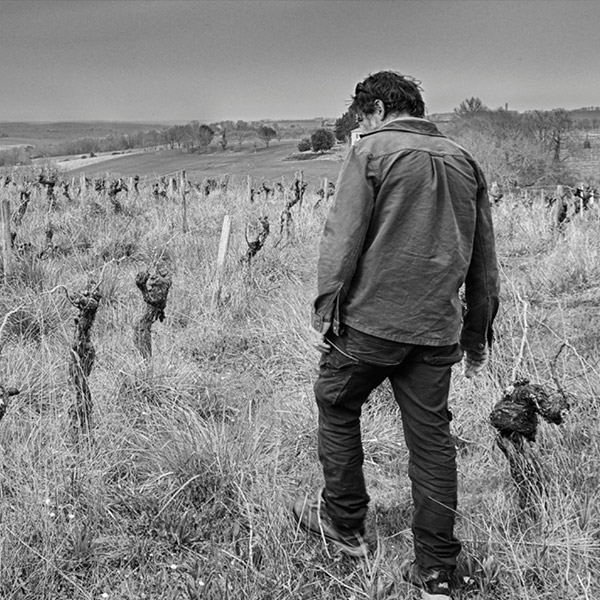
He finally took the plunge on the advice of a friend in 2014 and began his apprenticeship with Philippe Gironi, a former traveling distiller well known in the region. He was looking at that time to strengthen his team of distillers and took Rémi under his wing for a successful first season: after three months of distillation, Rémi already knew how to balance his still and mastered the main settings. He then practiced for a few years before returning to the family estate in 2017 to distill for his parents: at the age of 21 and after a 22-year break, Armagnac flowed again at Château Lassalle Baqué...
A logical continuation if we consider that we were already producing Armagnac on the château in 1884, the year of acquisition of the property.
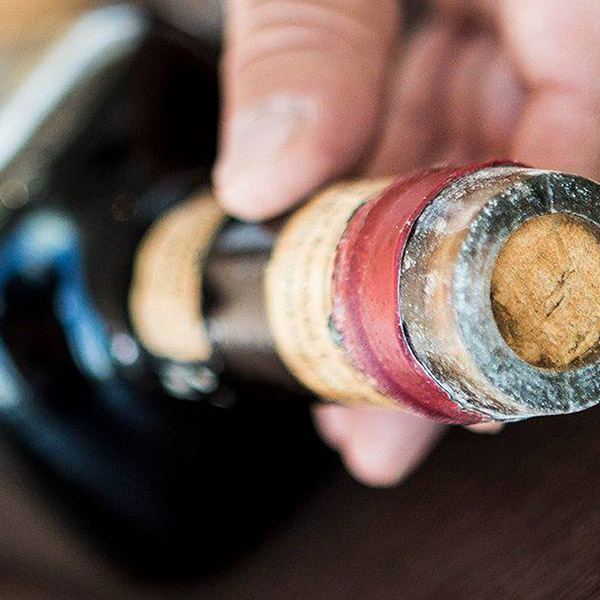
Before that, Rémi's ancestors did the same on a neighboring farm, as evidenced by certain bottles from 1880 that he treasures. And each time, the distillation was done in an itinerant way.
Today, Rémi works with around twenty customers spread over the three appellations and continues the distillations with growing appetite. The encounters he makes and maintains are a driving force and reflect the full diversity of Armagnac: he is both a witness to certain very old traditions, such as in Bas Armagnac where some winegrowers still prefer a low-degree distillate, and an actor with the vast majority of his customers who give him carte blanche to put in worth a whole year's work. It's all about trust and synergy, and tasting has never been more important. For him, a good distillation begins with a good wine, which he systematically tastes in order to regulate his still as precisely as possible.
Cleanliness is another key factor that must be impeccable to obtain a good eau-devie, whether it is intended for aging or to be marketed plain (as a Blanche).
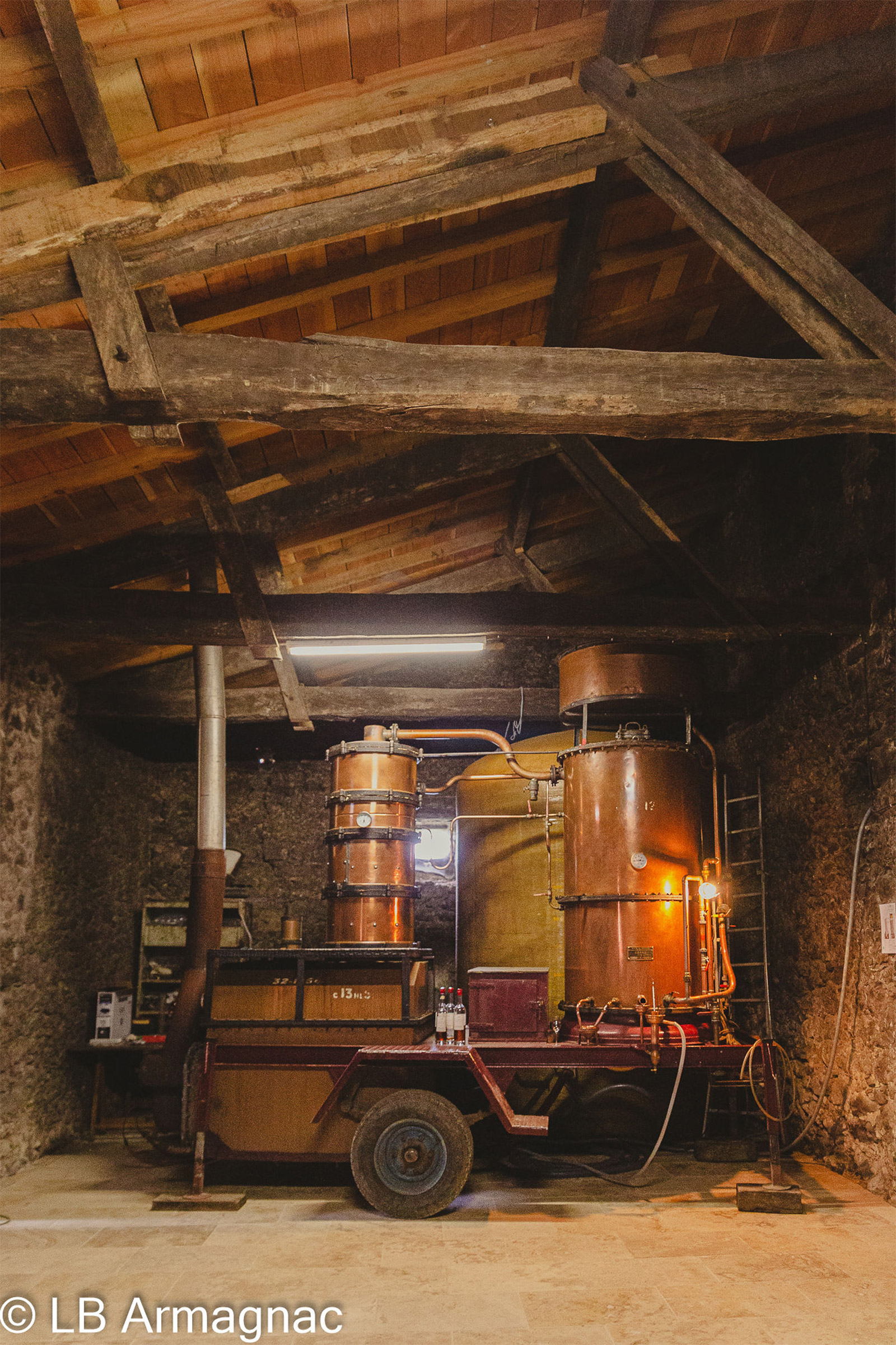
During the last campaign, he distilled some 700 hectoliters of pure alcohol for 19 customers, the equivalent of 350 barrels.
A little less even, if we consider that 85% of the distilled volume is actually aged, the rest being destined to be bottled like Blanche Armagnac or to go into the development of Floc de Gascogne. Knowing that he produces ten hectoliters of pure alcohol per 24 hours, this represents more than seventy days of non-stop distillation. A yield down 5 to 10% compared to other seasons but offset by the wish of winegrowers to maintain a regular production of Armagnac by reducing their volume of wine for consumption.
Asked about the grape varieties that he distills throughout the Armagnac appellation with his traveling still (a still from Sofac, a neighboring company), the same names come out: on the entire Haut-Armagnac side and a good part of Ténarèze , he mainly distills Ugni Blanc and Colombard for his customers, much more rarely Baco and no Folle Blanche. On the Bas Armagnac side, the Baco grape is king, followed by Ugni Blanc, a little Folle Blanche and very little Colombard. In recent years, Rémi has noted a renewed interest in the production of Armagnac with more and more customers, admittedly small in size, but who breathe new life into the profession. People who wish either to diversify their activities or to reintroduce a production of armagnac abandoned for a time, but who, all of them, participate in keeping the activity of nomad distiller alive.
Enough to give energy to Rémi and his fellow distillers who participate in their own way in keeping a whole section of history going, without forgetting to spread the good word by inviting each winegrower he meets to produce armagnac...